
- At 25, Audrey runs a 200-person company across 7 countries. Offices in Shenzhen, Hong Kong, Singapore, Tokyo, Dubai, Paris, and LA - with 50% of staff in engineering.
- Her AI golden frames became official state gifts for diplomatic events. The Abu Dhabi Royal Family uses them to welcome visiting heads of state - a picture in the frame that talks and greets visitors.
- The Abu Dhabi Royal Family invested after seeing one demo. They set up a joint venture so the AI frames could be branded as "from Abu Dhabi" rather than a Chinese company.
- InnoAIO's AI Translator hit #1 on JD.com (China's Amazon). A coin-sized magnetic device that attaches to your phone, translates across any messaging app, and clones your voice in other languages.
- She's planning a Hong Kong IPO - one of the youngest founders to do so, after building the company from a college animation platform to a global AI hardware business.
From College Animation Studio to Global AI Company
Audrey Quan started her company at 15 - or rather, she started what would become InnoAIO. It began as a college project: an animation video platform helping companies tell their brand stories through animated content. Oil companies, financial institutions, government agencies - they all needed a way to explain complex ideas simply. Audrey's team built the tools.
Over ten years, that platform evolved. First came AI digital humans that could clone your face, voice, and gestures. Then came the pivot that changed everything: a trip to the Middle East that would lead to royal investment, state gifts, and a hardware product that hit #1 on China's biggest e-commerce platform.
"When we went to the UAE, we found that it's just like China 10 years ago. We could bring Chinese products there and do it all again."
The Golden Frame That Caught a Royal Family's Eye
When Audrey's team first arrived in Abu Dhabi, they tried selling their AI digital human technology. The pitch was simple: clone yourself digitally, let the AI version do your marketing. But there was a problem. In the Middle East, people had time. They did not need an AI to replace them - they wanted to appear on camera themselves.
The breakthrough came from walking around Dubai. Audrey noticed something: golden frames were everywhere. In palaces, hotels, museums, subway stations - pictures of kings and leaders in ornate frames lined every public space. The idea clicked: what if those pictures could talk?
They combined their AI digital human technology with physical golden frames. Upload a photo, and the person in the frame comes alive - speaking, greeting visitors, answering questions in any language. The Royal Family saw the demo and immediately understood the potential: these could become national gifts for visiting heads of state.
"If they don't like AI digital humans to make videos, how about putting AI in a frame?"
The pivot that led to a royal investment.
How the Abu Dhabi Deal Actually Happened
InnoAIO was one of the first Chinese AI companies to enter the UAE market. They attended events hosted by Huawei and other tech giants, where they met princes, government officials, and members of the royal family. Through these connections, they demonstrated the AI frame concept.
The Royal Family's investment arm set up a joint venture with InnoAIO. The strategic logic was brilliant: the AI frames would be branded as "from Abu Dhabi" - a national product backed by royal investment, even though the core technology was developed in Shenzhen. When foreign leaders visit Abu Dhabi, they receive a golden AI frame as a state gift. Their picture is placed inside, and it greets every visitor who comes to see it.
"The Royal Family from Abu Dhabi invested to set up a new company with us. And after that, they tell everybody the AI frame is from Abu Dhabi. That's our national gift."
The AI Translator That Hit #1 on JD.com
The translator was born from InnoAIO's own frustration. When traveling to the Middle East, Audrey's co-founder Bruce could not speak any English - only Mandarin with a Dongbei accent. They bought every translation device on the market. None worked properly, especially with Arabic dialects. UAE Arabic and Saudi Arabic are different, and most devices only supported one version.
So they built their own. The InnoAIO AI Translator is a coin-sized magnetic device that attaches to the back of your phone via Bluetooth. Press the button, speak in your language, and the translation is automatically pasted into whatever app you are using - WhatsApp, WeChat, email, anything. No API integration needed. It works by physically using your phone's copy-paste function, bypassing platform restrictions entirely.
The device also clones your voice. Record 40 seconds of speech, and within seconds you can send voice messages in Arabic, German, or any of 150+ languages - in your own voice. During China's Double 11 shopping festival, the translator hit #1 in GMV across JD.com, Tmall, TikTok, and Red Note in the AI translator category.
Building Hardware from Shenzhen to the World
What makes Audrey's story remarkable is the speed of iteration. InnoAIO went from pure software to hardware in the span of a single business trip. When the Middle East market rejected their AI digital humans but loved physical frames, they pivoted within weeks. They visited museums and palaces to study frame aesthetics, found a factory partner, and produced their first AI golden frames.
The company now operates across seven countries with 200 employees, half of them in engineering. The product ecosystem ties together: the animation platform generates content and collects language data, the AI digital humans power the frames and agents, and the translator leverages all that multilingual data for real-time translation. Each product feeds the others.
Why Chinese Consumers Pay for Hardware, Not Software
One of the most revealing moments in our conversation was Audrey's explanation of Chinese consumer behavior. In China, people resist paying for software subscriptions. They share accounts, borrow logins, and avoid recurring payments. But they will happily pay for a physical product - something they can hold and gift.
This insight shaped InnoAIO's entire business model. The AI Translator is not sold as a subscription service. It is sold as a physical device with the software built in. The animation platform, which has been running for ten years, had reached a revenue ceiling of about 100 million RMB - impressive for SaaS in China, but limited by the culture's aversion to subscriptions. Hardware broke through that ceiling.
IPO Plans and What Comes Next
Audrey's next milestone is a Hong Kong IPO. The company is building its brand presence in Hong Kong, setting up local distributors, and establishing the institutional credibility needed for a public listing. At 25, she would be among the youngest founders to take a company public on the Hong Kong exchange.
Her advice for young founders? Participate in competitions - that is how InnoAIO got its first investors and government support. Listen obsessively to customer feedback, especially at exhibitions where hundreds of people can stress-test your product in days. And perhaps most importantly: take care of your health. Audrey forces herself to go hiking on weekends, drawing energy from nature to sustain the intensity of running a global company.
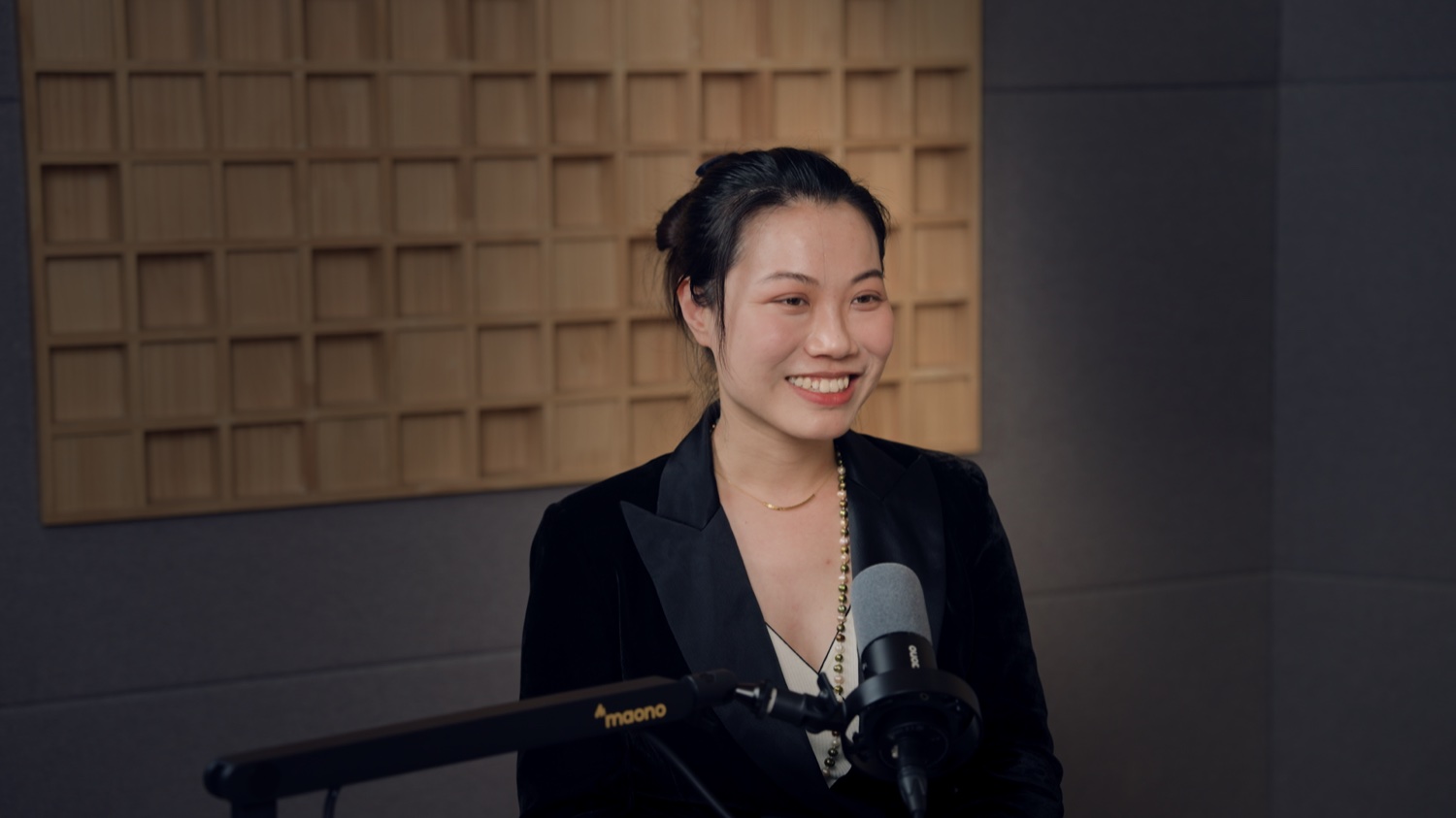
Audrey Quan
25-year-old founder running 200 employees across 7 global offices (Shenzhen, Hong Kong, Singapore, Tokyo, Dubai, Paris, LA). Started in college building an animation video platform, evolved into AI digital humans, then pivoted to AI-powered hardware. Products include AI golden frames (used as state gifts by Abu Dhabi's Royal Family), the InnoAIO AI Translator (#1 on JD.com), and AI picture frames. Abu Dhabi Royal Family investor. InnoX Academy alumna. Planning a Hong Kong IPO.
The Royal family from Saudi Arabia invested in your company, and Abu Dhabi invested in your company. Yes, exactly. After we went to the U.A.E., we found that it's just like China 10 years ago. And we told them that we have the AI technology that we can create an incredible AI digital human to help you replace yourself. But we think we have lots of time because we don't need to work.
They feel so bored. If there is a chance, I can take a video. I would like to film by myself, not my AI digital human. Actually, you know, at that time in China, making a picture talk was very easy technology. And we think it's too old to bring this technology to other countries. Because we would like to bring the best things to all parts of the world. But they don't think it's the best.
So that's why we need to step back. So you have the WhatsApp of the Abu Dhabi king? WhatsApp number? Welcome to the asiabits podcast. And today's guest, I'm a big fan of hers, is Audrey Quan. And she does crazy stuff. She's very young. She is from her own province in China. But the product she makes is even a favorite of the Abu Dhabi royal family.
And we had a lot of fun, a lot of interesting stories. Yeah, I was really impressed. And what stood out for me is like, how fast Shenzhen people think, how they develop ideas and how fast they pivot. That's crazy. So looking forward to today's episode. And if you want to stay up to date on what's happening here in Asia when it comes to technology and innovation, subscribe to asiabits.
We deliver the newest developments to your inbox every day from Monday to Friday. asiabits.com. And now let's go. So here we are. Two Germans and one Chinese speaking in English. Yeah. A little bit nervous, but it's very exciting. It is. And also, we are very excited to have you here on this podcast because maybe you and your
company will change this environment so that in the future, everybody can talk in different languages without being nervous. Yeah, exactly. Actually, we launched the product named Innoaio, which can support different people and different speakers in all languages. So maybe next time, instead of just a Chinese person saying something, you guys just speak German and everybody
can understand each other immediately. Yeah, that would be such a great help for doing business, for like every kind of communication, right? Yeah. So maybe you can start with telling us this story. I mean, you are still very, very young and you already have a very successful company for 10 years. So when did you first have the idea to say I have to start a company?
Actually, when I said I have this company, we have lots of stories because at that age, I'm still in college and my major is communication, mass communication. And what do we do? It's just like filming a movie or editing a video, just like a professional. You need to learn and to be a professional person in this industry.
And one day my partner came to see me, I want to create a very useful tool to help users who don't have any professional skills to generate their own ideas into a video. And I think that's a good idea that we can do together. Because you know, in college, I was still thinking about my career. But at first, we didn't build this platform immediately because we thought we wanted
to use animation style to express our ideas. So that's why the first clients from the industry maybe were from the oil industry because if they want to film advertisements, videos, you need to shoot very, very real-time things. But with those things, animation style would be better than filming the real things. That's why we wanted to use this style to express their brand story.
That's why we got lots of clients from the industry. Maybe some were from finance because finance deals with digital things. We cannot make a video to tell about their financial things. So that's why they found us to design animation videos. And after that, we got lots of materials and we got animation pictures and lots of things and we were thinking, oh, it's time.
We can set up our own creative platform for users. That's why we got this. And you know, nowadays we have AI technology and everybody can just put in a prompt or a sentence or just give a topic. And our platform will be based on AI technology and our own data and will elaborate and generate the script for your video. And after that, you can edit every sentence that you want. So when was that?
What time? The year? The technology? Yeah. It was just the beginning three years ago, I believe. Okay. Three years ago. So you started as a software company? Software. Yeah. We just provided customized services for making videos for our clients. We just got money for the company. But you were not using any form of AI? It was just, because it's 10 years ago, there was no AI back then.
We just used very, very professional tools to help our users design the brand, the story. And after that, we got income. We had the money. And that's why we buy lots of copyrighted pictures and animation data and things like that. And then we set up our own platform and help users generate videos by themselves. How did this happen? How did this happen? What was the platform like?
This platform was set up in 2018, but our company was set up in 2015. So after three years, we got this platform. And there are lots of users from maybe education, from finance institutes, institutions, or maybe government. If the government wants to explain their policies to the audience, most of the policies are very official and most people cannot understand them.
So that's why they want to use animation style to explain it more clearly so everybody can understand it. Yeah. So that's media and the government that can be used to explain what they think. And to educate people, if you want to, for example, you can educate the public about some knowledge for their life, for example, a traffic policy, something like this. Yeah. Green light, you can go. Yeah.
Exactly. That's a very easy way to help them understand. So you see lots of animation, little videos on the subway or bus, most of them are generated from our platform. And then you made a little money with the software and then you said, little money, yeah, exactly, little money, exactly. And then you said, we want to make big money and started a hardware company because what
Innoaio does is a hardware company, right? Yeah, that's because this is step by step. First of all, we just customized the videos, using professional tools and everybody knows about that. It's Adobe. Yeah, everybody knows about that. And we just give the creative ideas, the creative style, this animation to express their ideas. And after that, after three years, we got the animation platform and
we got the tools and we got the software and they just subscribe to our membership and use our tools. And since 2022 when AI came out, but by that time in China, AI was not very popular because ChatGPT and OpenAI just came out from the USA. And we, since then, we wanted to put AI technology into our platform. So we just updated our platform. So that's why we have the AI platform here.
And after that, we think that we can give a real role to broadcast your content, so that's why we added AI digital humans to our platform. So you not only can generate animation videos, but also can clone your own gestures, movements and your face and your voice. And animation style. Exactly. Exactly. You can also transfer your real AI digital human to an animated one.
And so you can choose different styles of it, maybe a digital human, maybe an animated avatar and put it into your videos. So it will be hosted and can speak anything that you want. And after that, we got lots of users from outside of China and our users, maybe from different countries, speak different languages. So that's why we think our AI digital human needs to speak different languages.
That's why we just put AI digital human into our platform. And after that, our company becomes bigger and bigger, we need to go outside, right? And so after the co-financing, everybody needs to visit our clients in person. So we go to the Middle East, we go to Germany, we go to France and lots of places. And we go there and we find the thing that we cannot speak their languages.
So that's a big problem. So we cannot tell them what we think and how our company does. So that's a trouble for us. And my partner of this company, Bruce, cannot speak any English, only can speak Mandarin with Dongbei accent. And that's why we buy lots of machines for translating. And we buy lots of hardware for translation with us, but it didn't work out. Maybe because of the data quality.
So how was it when you go to your client from Saudi Arabia and then you have this machine and then you're talking to it and then what kind of machine was that? Yeah, that's what we do. Because the first country we go to is in the Middle East, we go to Abu Dhabi, we go to Dubai and Saudi. And you know the Arabic in UAE or Saudi is very different Arabic.
But most of the machines won't have one Arabic. Yeah, we buy a translator that won't have one Arabic. So if it works in UAE, maybe it's not working in Saudi. So everybody just cannot communicate with each other. So we have to figure out how we can sell our products to the Middle East to these kings, princesses and princes, something like this.
So at that time you were still selling them the software, the AI, etc. Exactly. What would they do with your product? That's a problem. We believe we have the most popular AI technology because we can transfer your real human to AI digital human, right? And we told them that we have the AI technology that we can create an incredible AI digital
human to help you replace yourself and the AI digital human can work. Because you don't need to film by yourself. You can just use the AI digital human to do advertising videos. But they have lots of time because they don't need to work in Arabic and the national government gives them money, right? And so they don't need to work. They feel so bored.
If there is a chance to take a video, I would like to film by myself not my AI digital human. So when we talk about AI digital human, they don't know what it is. Yeah, that's the first question. And the second is why I need to use AI digital human to replace me because I don't work. Yeah. Why did you choose the UAE as the first market?
Actually, actually it's a trend and at that time the UAE gave a national vision that was 2018, that was a national vision. They wanted to set up new companies with high-tech and that's why lots of Chinese people would like to find business opportunities for AI. But we were the first Chinese company to go to the UAE and after we went to the UAE we found
that we could do a lot of things because it was just like China 10 years ago. So we could bring Chinese products to the UAE, we could do it all again. So that's why we wanted to set up an AI company in Abu Dhabi and we wanted to set up a new company in the Middle East. But the first question was language and the second question. What was it? They never thought about AI.
They never knew what AI digital humans were. So we felt so frustrated because nobody could accept the new concept. So that's why we just thought, thought, thought, thought because we didn't want to waste each other's time. So muchwei. They have a lot of time to waste. But not Chinese. Yeah. But when we hung around and worked around in Dubai, you know there are big frames. You know.
Those golden, golden, golden frames? Golden frames. They're very famous and attractive and lots of people go there. And we thought about that. How about putting our AI digital human in the frame if Middle Eastern people really, really like frames and would like a hundred pictures on the wall to show their centers.
And because you know if you go to public areas, there are a lot of AI frames which have their King's pictures printed on them. And if you go to hotels, you see all the pictures. Yeah, exactly. You go to museums and subways and lots of places have pictures. And even then they have very, very splendid palace places.
And you can visit their history and culture and also see frames of different sizes and different styles of golden frames. So we thought if they don't like AI digital humans to make videos for them, how about putting an AI frame into it? Make it a product. Yes, exactly. But we didn't have ways to approach them. So that's why we joined lots of events and lots of events were held by Huawei and
other big companies. They invited us because we were a Chinese company which had cutting edge technology. They would invite lots of their partners from different industries to join the events or summits in the UAE. We joined lots of events there. So through them, through this way, we meet lots of their princes, the royals, the Kings
and lots of government people and maybe some from the royal family. So I think that's a good place. That's a good idea. If someday I can put my picture into the frame, my picture can move. It can make just like, yeah, just like Harry Potter. Yeah, just greeting every visitor. It was incredible. That's a good idea. That's what we want. So in the end, there are still little children, right?
Everyone loves it. Yeah, exactly. So we found the business opportunity. So that's our first hit product between this year and next year. So you're really a businesswoman. You know, it's impressive. You just walk around the city and you're like, how can I modify or adjust or pivot my product or my business idea into something that the people would love to have here? Yeah, it's crazy. It's crazy.
They don't buy my product. So I go and I say, oh, they love pictures. So let me make money with the pictures. Yeah, exactly. So this was your idea? Exactly. Because we think about that actually, you know, at that time in China, driving a picture to talk, it's very easy technology. And we think it's time to bring this technology to other countries because we
would like to bring the best of China to the world. But they don't think it's the best. So that's the difference. So that's why we need to step back. To pick up the AI talking picture technology and combine it with the frame, that would be a new product. And everybody would like to buy it. And the most interesting part is they believe if we can have a frame that talks,
which means this can be their national gift to other countries' presidents. If you visit our country, that's how we show we're very honored and respect our distinguished guests. So that's why, but I can't say the AI frame is from China, a Chinese company. So how about that? The royal family has investment companies. So that's why they chose one to set up a joint venture with us.
So the Royal family from Saudi Arabia invested in your company, from Abu Dhabi invested in your company? Yes, exactly. The Royal family from Abu Dhabi, yes, to set up a new company with us. And after that, they tell everybody the AI frame is from Abu Dhabi. That's our national gift. But in the end, it's like, we'll go to Abu Dhabi and if they want to show their respect,
they will put a picture in the frame. When we leave Abu Dhabi, they will give the golden frame to you. The technology is made in Xinjiang. Yeah, exactly. But how does it work? Do you upload the pictures to the software or is it something with a camera or something? Yes, that's how it actually works. Most AI technology is based on our application.
So there would be an application installed in the hardware as a frame. Actually we don't have any advantages in hardware. So that's why we found another factory to make the golden frame, which can install our system into it. And the golden frame is also pretty much the same. Yes, it's our first chance to keep in touch with these factories because we are a software and AI company.
We never thought about generating a product with hardware. So that's the first try. It's totally different, right? It's totally different because we don't have any experience in hardware. So we go to lots of places and we go to museums to enhance our sense of beauty. To understand. To understand how the frames should look like in the UAE. Exactly.
We go to the palace and take lots of pictures and tell our staff. Look, the picture and the frame with the golden frame, that's what they like. And we take lots of pictures and we buy lots of books. So you went to the museums in Abu Dhabi or in the movies with the movie pictures? Exactly. We take lots of pictures. And for every picture, we don't focus on the picture exactly. We focus on the frame.
What kind of frame do you like? So we take lots of different frames and we just select different data and we generate our AI golden frame. But not really golden, just the color is golden. But if they want to have golden frames, they should also be able to get them, right? Probably they ordered some real golden frames from you?
We will figure it out because in Saudi, they have lots of mines and they have lots of gold. So they don't lack gold. They give us gold, we find a factory to make it a really golden frame. To incorporate the gold into the frame. Yeah, exactly. Okay. This is actually very interesting. So you saw this need for this product and then you said, okay, we need to do a hardware
product, although we are a software company. And I am quite sure that we also have a lot of listeners and viewers who have the same question and they're also interested in producing or building something on their own. So what was your first step? You said, I need a golden frame. What do you do? You reach out to people or you do some research or how do you find the right company, the right
factory to produce the hardware you need? Actually, first of all, you need to do the research and maybe the research is from the experience. Maybe the research is from you going to an event or an exhibition. For example, it's the first year that we go abroad, outside of China. So that's why we need to find the local exhibition.
Maybe we go to the IFA in Germany, maybe we go to the VivaTouch in France, maybe we go to the G-Tax in Dubai. That's very easy for you, right? Because we just find the event or exhibition and just go there. And there will be lots of visitors who come to our stand and they will challenge you. Why do you need this? Why do I need this? Why do I need to buy this one?
So give me the best reason that I will pay you for this product, so they will give you lots of questions and challenges. You need to explain, explain, explain. You need to persuade your clients or your visitors and tell your brand story and you will find the answers. And most of the time we believe that's the best seller in this country, but it doesn't
work because the demand is what you imagine, but not what they really want. So that's the difference. So that's why you go to do the research, maybe just from exhibitions, local exhibitions, maybe you just join the event or something like that or talk with other people and they will give you lots of data and feedback.
For us, we really recommend the exhibitions because it's the best way for lots of companies. Because when you have a stand, lots of visitors will come to you and you don't need to find them one by one. For example, if I want to do research, for example, now I want to sell my product to Germany, I need to find one German person to another German and it can be a very specific sample because you
will choose by yourself, but maybe it cannot be representative of your target group, German people. So that's why we tried a lot and we believe the exhibitions are the best way because lots of people will come to your stand. They will touch your product, ask about products and try products and give you questions, give you feedback. So just in several days, you get lots of data about your product.
You will know if I want to sell my business in this country, what do I need to do? What do I need to update in the AI technology or just adapt to their own culture or the market or lots of things. You need to think about these things and if you really want to give a good product, you need to listen to the clients and visitors.
So you frequently talk to your clients to get some ideas on how to update or adjust the products or even find something else that they might want to have and then also depending on what kind of market you're looking at. Yeah, exactly. Because at the beginning, we just think about that. If I'm a German, what would I like to do? So we just search on Google. It's not enough. So what does Google say?
What do Germans like to do? We believe the Germans may be very serious about this. Yes, we are. Yeah, exactly. But how serious are they about this? You can feel it. So you just talk with people. People will give you feedback and that's frequent feedback at the same time. It's just like a huge shock to you. There are so many differences. Because you need to have your passion.
If you have it, keep talking with the people. They just give lots of different feedback and some even tell us, it's a very strange question. Why do you have such a strange question? Yeah, we Germans are good at strange questions. Yeah, exactly. That's why we need to figure out what we should do to satisfy our clients, our visitors. So how do you actually satisfy Germans?
That's a very interesting question. This year we went to IFA in Berlin and that was our first time going to Germany. We just rented a very big booth and we brought our product there. But unfortunately our booth's location was not very good because around our company, there were lots of companies that sell charging cables and cell phone cases, lots of things. And we were the only AI company there.
So there were fewer visitors coming to our exhibition hall because we were in a very corner of the whole place. So that's why we thought about the idea. First of all, I need to attract Germans to come to our stand. Then we can get the feedback. Give them some beer and sausage. We didn't know how to do it. So we just rented a TV and we just rented a microphone. Just did presentations on our stage.
We were just talking in Chinese or English and all the translation would be on the TV screen which shows the German and everybody comes here to look at our screen and to check. Because you are very serious about the... Yeah, exactly. We'll check how your translation... How is our translation? Live translation. Live translation.
Because we cannot speak German, so we don't know how to communicate with these visitors. And when we speak English and most of the gentlemen, maybe the older ones, they cannot hear very clearly and they cannot speak much English. So we don't know how to get the feedback from them. So that's why we just speak Chinese and our AI technology will translate on the screen.
And we just look, what's our company? And how accurate it is. So they will give us feedback. They will challenge us on our strategy. And some will give very high compliments. So the first time, such a first translation in real time and in the meantime, German grammar is so different from Chinese. Yes, really. Because the verb is at the very end of the sentence. Is it? I don't even know.
You don't know? We don't really. Yeah, maybe it is. We don't know. We just talk like this. I don't know. Because our partner told us that the verb will be at the end of the sentence. The order is definitely completely different. That's true. Another difference from English. Yeah. One question. We're too fast. Shenzhen speed. This is China speed, too fast.
So we are now talking about the product that we haven't even introduced yet. Yeah. So now, after the software, after the picture for the Saudi Arabian kings, you started a new product, which is a hardware product, which is the translation product. The Innoaio. We just skipped part of this. Yeah. It's too fast. It's so, so, so, so, so fast for everyone. Yeah, actually, it's a magnetic AI translator.
And actually, at first, we had totally no idea about creating an AI translator, which was to think about how we can communicate with our clients. And at first, we went to the Middle East, and people speak Arabic, and people speak different Arabic. They have different accents with Arabic. So we bought lots of translators in the market.
We bought different brand translators, brought them to different countries to communicate with our clients. But they didn't work well because they speak different Arabic. So that's why we thought about that. We have so many clients, users on our platform, and most users are from all over the world, they use their own language to generate animation videos. And videos must have the, um, identity.
Identity. Yeah. Yeah. Yeah. Have all the data. And we also have the digital human, and our digital human can already speak 150 different languages. Why not? We can use this data and our AI technology to set up a new product to do the translation. That's what we want. Actually, at first, we only wanted to solve our own problems. So at first, we needed to solve our sea level people's products,
because we need to meet these clients and we need to communicate with them. So when we come back to our country, we end up with WhatsApp. We don't know what we should do. How do I need to text in German or Arabic to our clients? Yeah. That's, um, I love it. So you have the WhatsApp of the Abu Dhabi king. Uh, what's the number? I can't, I cannot tell you. Uh, uh, uh, uh, uh, uh,
And after that, we, uh, we thought about how we can solve this problem. That's why we have this AI product. We can work across any social media platform for translation. So let's describe it to the people who don't watch us but listen to us. So this is small, like a coin. Yeah. It's as big as a coin. Very light stuff. And you just put it on the back of your phone. Yeah. Magnetic, right?
And it needs to connect with the phone through Bluetooth. And, uh, for example, I will show everybody, for example, I just speak Chinese and it transfers to. So the problem is, do you need to talk into this one or is it? What do you need this for? Actually, for the hardware, as a first option, I just have software and most translation can be done with the software.
But we still need the hardware because it's a trigger to work across all social media. Because the hardware has its advantages. Yeah. To support the software. So this, this hardware helps you, whether you use WeChat or Instagram Messenger or WhatsApp, whatever, it helps you to put the text or the voice you input into your app, put it directly in the platform, right? Exactly. That's what we do.
And this hardware, um, has other functions. It has an AI accelerator chip that can speed up your translation in real time. And in the meantime, it can also store your data because, you know, when we go abroad. People really care about their data security. So that's why we have this little machine to save the data locally. So every translation data will be saved on the little machine.
So that's what we think about. So there's no cloud. So whatever you put inside, it's not going to a cloud. Actually, we still use a cloud, but all the data will be stored in this little machine. So everything won't be stored in the cloud. Okay. So in function, it can work across any social media platform. So which means you don't need to copy, no need to paste, and just press the button.
And you just speak your mother language and release the button and everything will be translated immediately. And it will automatically paste to your text bar. So before it was like this, I wanted to send a text message to my Arabic client. And then I go to Google Translate, put it inside, then copy it, paste, right? Exactly. But with your hardware, what I can do is I just press the button. Yes.
And I talk in German. Yes. And then the Arabic will automatically appear in WhatsApp. Yeah, exactly. I will show you. So we'll just give a little example. For example, this is my WeChat. No, no, sorry, it's my WhatsApp. Yeah. And I already connected my machine with my software and I just choose Chinese to English. So you need another app for this one, also, right? Yeah.
And this is our application because we are an AI company and actually the highlight of this product is the AI technology in the software. And the hardware is just for storing the data. And also has a function to work across apps. I will show you. For example, I already chose my mother language of Chinese and chose your language German. And I just open my WhatsApp.
For example, I will choose the chat with Bruce. And I want to speak Chinese. It will be translated. Hello, what's in the chat? I'm in the chat. Where are you? I release the button. It will automatically paste and then send. And in German it will be: Hello, I'm in Chen Chen. Where are you today? It's my voice speaking your language, right? Yeah. It clones your voice also, which is amazing.
And also, I can send a voice message with my voice but speaking Arabic to the Arabic client. Wow. This is amazing. So I just keep my own character. But I show respect to my client. This is great. So this device basically stores your voice, everything from you. And then it automatically translates or uses your voice clones - it clones your voice in order to generate the languages. Sure.
If you have this little machine, first of all, you go to the settings. And then you go to your voice. You just record online. It's 40 seconds. And after that, your voice will be cloned in three to five seconds. Okay. So in no more than one minute, you will have your own voice. But you use the microphone of the device, not of this little one. Sure.
Because, you know, nowadays, the smartphone has a very specific microphone in your phone. So, because our clients don't need to pay for a new speaker in my machine. Okay. So because it's already connected with Bluetooth, it will just use your phone's speaker, not camera, the speaker, to collect your voice. Okay. So now your company still has three different products. Yeah.
Software and two hardware. Yeah. Also, we have the AI agent because, you know, we talked about having lots of animation video clients. And after that, we have AI technology. Everybody wants to have their own brand. Maybe that's a mascot. Maybe it's a doggy. Maybe it's an eco. Maybe it's, for example, in Qatar, they use the scarf as their brand. Works as the World Cup competition's mascot.
So with these ideas, we found the business opportunity. And we believe every institution, company, and government needs a sample of their own brand. So they can use animation, animated avatars. Or just use real digital humans. It all works. But maybe for our company, if I'm a CEO, I believe I have my own character. Maybe I just use my real digital human as our company's brand.
Just like we have lots of famous companies - they use their own founder's face, the real picture as their own brand as a patent. So you see? Yeah. But yeah, our company, we use animated IP as our brand. Yeah. So that's what we do. So after that, we just use our animated model to generate their own agent. To animate your picture, to be your own assistant.
You can set up your own assistant with your own mascot. So it can interact with your different visitors or your clients. And then you put it in the golden frame and then you talk to yourself as your own assistant. Exactly. You're so smart. So after one year, we not only can make the picture talk, but also can interact with your clients.
You can put your own data on your speech or your character into it. For example, I just need Trump's picture. And I just select the speech from the internet or from lots of platforms. And I train the model and I can make the picture speak German. Speak Chinese to me. Speak German to you. That's funny. So you could basically send this frame as a gift to one of your potential clients abroad.
And having all the data of your company in there, so your client could basically ask the frame about everything from your company in their mother language. Which would be like super, super convenient, right? Yes. So I don't need to speak lots of languages.
If you want to know more about our products or Innoaio or our other products, you just speak German and our AI API agent will answer your questions. But with our own mascot. This is very nice. So we just give a tool to help users not only generate their own videos, promotion or advertising, but we can generate an assistant with the same image. Or same mascot, so a generated AI assistant.
So we're still very happy that we can have you on the podcast. Because in two or three years, we're just talking to my friend. Talk to my friend. Yeah, exactly. This is actually very interesting. So you do produce what seemingly is like three different or four different products. But in the end, they all go together. Exactly. From the beginning, we had no AI technology.
We just want to generate an intelligent platform for users who have no specific or professional skills. But they can also generate their ideas to be animation videos. And after that, we have AI technology. And make the characters from inside the animation videos become real AI assistants for you. It will be vivid and it can talk about anything. It can also be a live demonstration.
And also in the meanwhile, you can put your company's data or specific data to set up your own company's model to train the AI assistant. In the meanwhile, it can speak different languages because maybe your clients will be more and more international as your company gets bigger and bigger. Right. So after that, step by step, at first we had the translation. We just want to solve our own problems.
And we want to keep our own character's voice because we want people to remember. Remember. And we don't want to clone my voice. And we'll remember to keep our own tone and our own character. And after that, you use your own voice to speak different languages. But in the meanwhile, there's a translate button. And you can translate it and automatically paste it to the text part of the message.
We're first. But again, for this product, how does the hardware help you to basically make it possible to use different apps? You said the hardware helps you also to surpass some sort of limitations. Yeah, actually, first of all, all the products we design are based on our clients' demand. That's very important. That's very important. Why do we need this hardware? Mostly we have lots of software.
It can solve lots of problems because we notice a very, very small detail that Arabic is read from right to left. They cannot eat. They just pray every day. Ramadan. I don't know how they eat. Yeah, Ramadan. Yeah. They just eat before. Yeah, yeah. Just in March and April, that's two months. Yeah, they cannot eat anything during the day. Yeah, yeah, during the day.
And maybe after five o'clock or eight o'clock, they can just eat some sweet things or just drink water. Something like this. But those days we need to work in China. We need to work. They didn't work. And they cannot eat anything. They will be starving, you know, in the day. And to save energy, they will forget lots of things that, even forget who you are.
For example, they sent a message to you and after days, who are you? I don't remember you. I don't remember. I texted you. So when we don't reply to their message today, otherwise tomorrow, they forgot us. Yeah, they forgot us. Wow. They don't know. I never think about it. I talk about it with the business. I don't know. I have no idea. So we need to reply very fast. Yeah.
And to get their attention. Yeah, attention. Yeah, attention. And also we need to reply to them fast to talk about things. And we need to depend on their time, not ours. So that's why we need to reply to them faster than they send messages to me. So that's why we have the machine, which is to speak. And everybody wants to release the money. Everything will be translated already.
I just said, we were fast. And also I can send a voice message. And sometimes we want to type. They save their energy. It's just easier to send me a voice message. You know, in WhatsApp, it's not very convenient for them. WeChat because WeChat. It can transfer the voice message to text. Yeah. So you can copy it to Google Translate to translate what they mean.
But WhatsApp, no, it's just a voice message. They cannot translate it to text, convert it to text. So there's no way to know what they say. Yeah. So that's why we have the need where you press the button, press, and play the voice message. And when everything comes out, it will be broadcast and transferred to Chinese for me. And it will be broadcast to me.
So that's a very efficient way to communicate with others. So that's why we want this hardware. Because as a new company, a startup, an AI Chinese company, there's no way to get API from WeChat, from WhatsApp, or other social media from other countries. Maybe we can get the API from WeChat, but not from every social media from other countries. So that's why we think that's a good idea.
Because with this hardware, which has a press button, it will be like a trigger. So you don't need an API. You're not relying on other platforms. Yeah, we just rely on a physical machine. It's just like a Bluetooth mouse. Yeah. It's already copy and paste to the system of the machine. And we release it. It will be pasted to the text bar. So it's a physical way instead of their API. Okay.
That's why we need this hardware. Yeah, exactly. We just use a very smart way to solve this problem. Otherwise, we would have lots of, you know, problems. With all the platforms. Yeah, you can't get it there. Yeah. So we were thinking, we were, what? The communication with you, right? So that's why we need the hardware.
Because we use the hardware to solve the problems that we can't solve with software. This is very smart. I would even say street smart. You have a problem and then you have a very practical solution. Work over. Exactly. So because it just uses your phone's copy and paste functions. That's much easier, right? Yeah. Because it only has the function with Bluetooth. Yeah.
It only connects with a smartphone with Bluetooth. It can use the copy and paste functions. And when you press this button, the software that works behind your system, behind your WeChat or WhatsApp and we translate everything. Yeah, yeah. We'll be listening. And we'll release it. And we'll paste it for you. I record voice into WeChat or WhatsApp social media. That's why it's super fast.
As soon as you release it, it's just on the site. Yeah, exactly. Sometimes you also need your computing functions on the cloud. You need to be very fast and you need the high technology. But in the meanwhile, in a smart way to solve the problems with how to, how can I go through WeChat, WhatsApp or TikTok or different platforms.
Also, in the meanwhile, we can also use this hardware to send an email. It's the same way. Yeah, it's just copy-paste basically. No matter which app, it doesn't necessarily need to be a messenger app. Exactly. You can be like, in your notes or whatever. If there's a text bar, it will work. And do your customers actually use it? Like the Abu Dhabi King, he wants to write your message.
Does he actually use it? Actually, our clients, our clients, most of them, they would be, like, the business. Because how to say, we designed this product not for perfection. We want to let every language and also the culture that handles the language be understood at the same time. So sometimes our clients, they just want to communicate with their customers.
They want to show their respect. For example, you're from Germany. Even though, you know, I cannot speak any German, but I still use the language to express what I want to think. You can feel my respect. When you speak German to me and when you feel everything that you speak or your text to me will be understood, you will feel so comfortable. Exactly. It's very important.
It's comfortable when every language can be understood. That was also very good timing after post-COVID when companies tried to collaborate again, cross-border. It's actually very helpful and a very good tool. Your target audience or target customers are basically business people who want to understand each other or sell products in their language. But as you said, your target group is yourself.
You started with solving your C-level team head. Actually a lot of entrepreneurs do the same. They have a problem. They see a problem and then they solve it for themselves. Maybe I could do it for the public. It's the same why we started our newsletter. Why we started this podcast. Because we said, especially you said, I want to know what's going on in Asia.
I cannot find any information in English or German. That's why we started asiabits. That's what we do. I believe you gave a very good idea. It's good timing. Translator is a product. It's not a new product. Lots of companies already have translation. As you are in the industry, lots of people already do blogging. They have lots of content.
They have a place where a group of people just like yourself. They need to get more opportunities from this company. They are in co-financing. The economy in our country is going down. The business is not very good. We need to find more chances to take our company further and further. That's why we need to go outside. The same type of company.
They also need to go outside to find more opportunities in different countries. They need to go to different countries. Even though we never thought about that before. Before this happened, we were just in our country. We sold our product to the world. Nothing happened. We were very happy. We believed that at this step, we would just go public.
In the south and all the countries, all the cities were closed. Everything was just shut down. It was just the incident. After that, three years just passed. We don't know what happened in this world. You need to get out. You need to communicate with other people. Lots of companies got out. We need communication. We need this thing. We pay lots of other countries. People have access.
People have different cultures. We don't know what they are talking about. We want to solve our own problem. That's why we have this weird function. We are very smart. We are smart. Actually, we are a translator. We will ask. What is this function? Why is it called cross-app translation? We told you that if we want to send the text to your clients,
you can press the button and translate it to your native language. We will release it. We will translate it to another language immediately. We will automatically paste it. It's just a scent. People will think it's a strange demand. I don't need it. For this company, they really need communication with other countries. We are so great. That's what I need. You solved my big problem.
We have other functions like video calls. There is a real-time translation feature. We also have these functions. That's similar to others. We can't imagine. It's the cross-app translation. That's the basic style we need. But in your whole ecosystem, it makes a lot of sense. What are you doing? For example, Apple would release this kind of functionality natively in their phones.
It's basically saying, I want to translate from the Apple keyboard. Then you still have this. Your creative platform. The experience you have from all this advertising, avatar creation, so your whole ecosystem makes a lot of sense in this area. Otherwise, did you think of this scenario when Apple or Google would incorporate this kind of functionality in their keyboard?
Just say, which would be first? Not Google, but Apple. Which would be first. I think we should. It's a very, very good question. Are you afraid of this? Not really. Because you know, as we stepped from the beginning of setting up our company to now, we've made lots of progress. Every AI, or basic model, or with more functions, our application will be better and better. We believe that
if we don't have the translation, maybe we have another something like this. We'll be solving other problems. We'll give some more interesting and creative products. Maybe one day they won't need frames. Maybe one day they'll just need other things. Who knows? But if you don't have the translation, you can do it. You can do it. If you don't have the translation, you can do it. But
all the products will be based on our whole vision and mission. We want to create a platform that helps users express their ideas. As soon as there is another thing coming up, you are just walking around looking around you and then finding others. Business opportunities. What can we do with this word? You can find business opportunities for this. Yeah, you can find lots of opportunities.
No need to do that. Lots of opportunities. No need to be afraid of things that didn't happen. At this time, we need this. We need this. Then we can solve lots of problems. We can have many companies doing good things. That's enough. Maybe the product will have two years. Yeah, maybe after two years. No need for translation. It's okay. Everybody can just speak German. It's better.
So, most of the things they want to do is to have a chance to express what they think. What they believe. What they want to do for everybody. And we want everybody to be understood at the same time. Yeah, that's from the animation videos. From the AI Digital Human. From the Translator. And the Translator will only have two years. Yeah, two years. In the first year we go to the Middle East.
And we think about it. We won't have a Translator software problem. Actually, as a first, we don't want to add the product to the public. We only solve our own problems. And we have this machine for our, say, sales people. And after that, every time we got samples from the factory, and it would be gone. And it's, oh, the translator is so good. Just let me try it.
Because the accuracy is so high, right? Yes. And for Google Translate, Google Translate has around eight different languages. But sometimes they have the data from text to text. But for specific languages, it will be a no. It will tell you I can do text to text, but I don't have the voice data. So it cannot be speech to text. Or text to speech, because I don't have the speech data.
That's why we gather lots of different language data. Maybe from speech. This is what you gathered from your creative platform. Yeah, exactly. And this is not something that you would use to collect more data for improving the models. Because we collect audio and different countries' data from our animation models because we do the video. And we also do the audio.
And we gather their users' accents. And gather the culture, gather their speech, and lots of videos. And we do this translator. But it also uses the foundation model of the chat activity. And because chat activity already works well. We don't need our users to believe in the data. And we just give supply to this. And we just set a specific cell module to solve the specific questions. Yeah.
So which one drives the most revenue right now? Revenue for this one? No, we don't. Of the products in the company. Yeah. And we are in the global. We just, uh, we just set a specific cell module to solve the specific questions. Yeah. And in the global, we just, uh, point to four billion RMB. Uh-huh. I don't know what's transferred to USD. Yeah, a lot. Oh, no.
But I mean, like with your main product. Yeah. Which is the product that drives the most revenue? You make more money with this one or with the software or with the frame? Which one makes the most money? Uh, because our animation platform has already been around for 10 years. So that has the most users and clients for this product. But this little machine has only been around for two years.
But its revenue is growing faster. Okay. Because that's the first product we made for individuals. So this also has the biggest potential, right? Uh, yeah, exactly. Exactly. Because for this Double 11 festival, there's a large shopping festival in China. And its sales GMV also got the top one on jd.com, Tmall, TikTok, Red Note, and all these platforms.
And GMV was top one in the industry of AI translators. Yeah, exactly. Yeah, I mean, it's like we're here talking. It's very fun and a good product. But also you managed to get a lot of people to invest a lot of money in your company, right? You have investors from abroad and from China, I guess, also. And what was your pitch to them? So what was the one thing that made them say,
"Yeah, I want to invest my money in this company"? Okay. Maybe it's our charming character. Yeah, that is for sure. So our team, maybe that's the first reason. Because you need to let the investors see your passion. And the people behind it. See the vision and you need to do good things and insist on doing good things.
For example, from the beginning, we had the vision that we want all people to be able to express their ideas and use animation videos. Sometimes they cannot film a good movie, but they can express what they think. That's what we thought at first. And to this day, we still insist on what we do. And we want every language to be understood.
And because every language has a specific and unique culture behind it, they deserve to be understood. So that's what we believe. And you will attract a lot of people or investors to believe in you. They believe what you think, they believe what you do. And they have to insist on doing good things.
And when they try the product, they can feel that all your heart is focused on putting your clients' needs first. They believe that they can do good things. They believe that if you have this passion to do this product. And you put all your clients' demands first. They will believe that's a big way to accompany this future. And at the same time, your customers will give you good feedback.
If you believe you must treat your customers as very smart people. And you cannot fool them. You cannot believe everybody is just a fool. So you need to think about every detail of their experience. Even though not all these people do AI technology, everybody can have a good idea to set up a new company, maybe doing the same things. But the experience of different products is totally different.
So you need to care about their feelings, care about their experience, care about what they do, care about what they want to get from your product. And they will recommend your product to different people. And you will get more feedback so you can grow up very fast. And first, we just participated in lots of competitions. We just gave a pitch in the competitions. We joined lots of competitions.
These different competitions have different requirements. We just used this simple way to sign up for these competitions. To join the participation. If you have the chance, you can meet lots of investors. And after that, maybe the government will invest in you too if you join the local government's competition.
So we joined lots of competitions in the first, second, and third years from 2015 to 2018. And we joined lots of competitions. So when you go to our company, we have awards from different competitions on the wall, that's what we did in the first few years. And also for the competitions, that's also a good way to get income because if you win. Because every competition will have bonuses.
And prize money. Yeah, exactly. It just covers lots of fees. If you join the competition, what kind of competition is it? Do you have to demo the product or is it just a pitch night or it's a startup competition? In China, there will be lots every month, every city, every institution will hold different industry startup competitions.
You just search on websites or maybe your friends recommend to you and you join the competition. That's in your own industry and you just try. How long does the competition take? Usually maybe three to six months. Because there will be different rounds of the competition. And if you can go to the end, more investors will be interested in you.
So we got lots of investors and of course, maybe clients, maybe the government, they will believe that's a good company. They will bring you to these places. They will give lots of policies to you and they will bring you up. Is it a kind of competition? Do they give you a topic or some tasks that you need to solve or how does it work?
Actually, for example, Peking University will hold an AI startup competition. And there will be different requirements - first of all, your company cannot be older than five years, which means you are a small company. And maybe you can go further than B round, maybe just pre-A, B round can join this competition.
What you do or your products must be with AI technology or AI application and they will give you the topic, give you the industry and give the requirements for your company and everybody comes to this city and joins the competition. But right now you have really big VCs investing in you, right? It's not just university and government. Exactly.
Also foreign VCs, right? How did they, how did you get in contact with them? I believe at first we got the investors from the competition. And after that, if you have investors in your country, you will have PR reach and lots of other investment institutions will recognize you.
This company, as a solver, they would like to know about you and about your business. As you grow bigger with more clients, they will also come to you. Yeah, yeah, just for fun to us. And maybe just recommended by our shareholders. And also, having AI in your name is very good, right? With AI in your name, you just get like one million extra.
But is it like VCs are currently only looking for AI companies? Are VCs actually now still on the hunt for funding AI software companies? You mean in China? Yeah. Yeah, a lot, because you know, when capital gets lots of money from their LPs, they need to think about how can I manage this capital?
So maybe at first they focused on other traditional industries, but nowadays they need to think about how AI industries are going faster and faster. Maybe they will consider traditional industry plus AI. Plus, right? Exactly. They will be thinking about how they need to give this money out because you cannot hold the money all the time and not invest it.
So they will be thinking about all the other companies that they have already invested in. Yeah, but the thing is that I guess right now there are so many AI and software companies here in China, so how do they choose or how do they find you? Only because you had like one or two rounds before and you have some sort of PR already, or are they generally right now interested in all these AI companies?
And looking at screening all the AI companies here in China? Yeah, exactly, because you know in China lots of VCs focus on AI technology, but each deal may focus on different industries. Maybe AI plus robotics, AI plus medicine, or AI plus applications. Just like us, we are AI applications because we don't build foundation models.
We're not the foundation model. We take lots of other specific industry cases and we put them into this product - that's the application. So maybe before we had AI applications, we were in animation videos, and our industry is SaaS industry, and lots of investment firms will find this SaaS industry and wonder which company they would like to know about.
And they will know you from competitions, maybe know you from media reports, maybe just know you from the product, and they'll be thinking about having a talk. But from our experience, we don't just give data at first because some investment firms, maybe at the end they don't invest in you, but they will give your data to the public.
That's not very good for the company's development. At first we need to talk about our ideas, our business plan, and what we do and how the company looks - that's basic information that's good. But if you want to give more information, we need to ensure we have an NDA, and after that you can give more specific data to the investors.
So maybe not every investor who finds you is a good investment - maybe it's over to me, maybe we'll think about that. And different investors have different styles. Most people just want to earn money from this company, so they are very focused on your financial situation.
But some investors don't think about that. Maybe your financial situation is not as good as it looks, but we believe this industry will be bigger and bigger. They just invest for the future of this industry - they will choose one or two good companies in this industry. Maybe one goes public, maybe one just breaks down, but no matter what, if just one company can be successful, they will win.
And we were talking to a friend recently and he said - and I just want to ask you if it's true - that a lot of Chinese investors are not that interested in just investing in software anymore, pure software. Pure software. They like to have hardware, something they can touch - software plus hardware. Is it true?
To some extent, yes, because you know in China, people's shopping habits are totally different from other countries. Maybe in the US or other countries, I would like to subscribe to ChatGPT every month - I would like to pay for software. In China, no, we don't want to pay. For example, if you have a YouTube account, I would like to borrow your account.
I won't buy, you know. I borrow your account. Maybe you have a Bilibili social media account and you have the membership - I borrow it from another friend to get the Bilibili account. So Chinese consumers are more willing to pay for hardware than for software. Exactly. Yeah, exactly. We don't have the habit to pay every month, you know, so that's why we just use hardware.
This can be a gift, it can be a real thing that I can touch, and I pay for this, and it's already connected to the subscription of some software. But on the other hand, we were talking about how people in Europe love to pay for subscriptions. We do too, because we are not a very poor startup, so we have to save money.
So we sat down for an hour, everyone with their own bank account, and we checked all the subscriptions we have. Like I had 20-something subscriptions. Paying every month for Spotify, for some services, ChatGPT and so on. It's very good recurring revenue, but yeah, because most people just forget about it. So at the beginning of the month I said, "Oh damn, yeah, 100 euros gone."
So this is actually not a good business model for Chinese companies - doing a subscription-based model. Exactly. With all the money. No, I don't know. So you have to have a good product. Yeah, actually as software, we only have 0.1 billion RMB revenue. It stops there because in China, if you have 0.1 billion RMB revenue for SaaS, this is incredible. Only such big companies can achieve this.
Because nobody would like to buy software as a membership or subscribe to buy software, so we already reached my level. Yeah yeah yeah, we already do such a thing, so that's why I want to go broad, but we don't want to give up the Chinese market because China has so many people. Yeah.
So that's why we do the hardware and we will like to pay for the hardware, and they would like to believe if I have the hardware, but they don't want the hardware to have membership or subscription. They don't want to have this - they want to buy this and immediately use it all their life, even though they won't use it twice. Yeah.
You live in Hong Kong but the company is in Guangdong, right, in Xinjiang. We have different branches in Singapore, and in China we have Hong Kong office, Xinjiang, Shanghai, Beijing, lots of cities in China we have offices, and all of China, besides Singapore and Paris. And also we have the Tokyo office and we have Dubai, Abu Dhabi office. And also we have the LA office in the USA. Yeah exactly.
How many people do you have right now? We have around 200 employees, but we are a company that doesn't need so many people, and most of them - 50% - are IT guys. And no no. 50% of our employees are for IT. Yeah. Yeah. Yeah. And the other people support our products, maybe for sales, maybe lawyers and lots of things. Yeah.
And you are the co-founder and living in Hong Kong, but you must be very busy, right? But still I see you posting pictures of you going hiking on the weekend. Yeah. This is not right. People from Xinjiang cannot go hiking on the weekend. You have to work. Actually, you know, at the very beginning when setting up this company, I worked very hard. I even couldn't sleep every day.
I work during the work day. I work with Chinese clients at night. I work with overseas clients and they buy day by day, like this. But it's not good for health, right? Oh. Because when they just die, the company is gone. So I just forced myself to stop and just go hiking and get energy from nature and keep a very high level of energy and give myself a positive way to face lots of problems,
issues, maybe from clients or employees, investors and lots of kinds of things. And you need to solve lots of problems during the day, and you need to get energy from nature - that creates a circle.
It's very interesting because in the beginning you said that after you graduated, you were kind of afraid of jumping into this industry where you have a lot of competition with people, or especially men. And then you chose what I think is the hardest way - to found your own company, right? Yeah, exactly. Sure. But we must live our own life. I don't mind what other people comment.
So what we do is we want to achieve - we want to transfer our idea to be a specific product to help our people. So there will be lots of challenges, maybe from other people, and sometimes in tech I must be very mature and very different than most people maybe at the same age.
I cannot just - just like you believe you are a co-founder, you cannot just rest, you can be very pretty or just do lots of things. No, I am a person. I need to have lots of perspectives in my life. Yeah, exactly. And sometimes when you go hiking, you can maybe find a solution to a problem you wouldn't when you're just sitting in the office and staring at the screen, right?
Yeah, after work, the problem is just to solve for the better self. Yeah, walk around too, by the way. Yeah, you need to because we are a creative platform. You need to keep your mind very, very, very clear and positive. Yeah, so the goal for the next few years is a big IPO in 2027. Yeah, go public. Yeah, go public. Yeah, where would you do it? Hong Kong. Hong Kong.
That's why I'm supporting the local market in Hong Kong. We just have distributors in Hong Kong and we want to set up our brand story in Hong Kong. Yeah, that's amazing. Yeah, we're looking forward to it and it was so interesting. Very crazy story. Thank you so much for being here with us. Thank you. Thank you. Thank you. We learned a lot and hopefully in 10 years we will also go IPO.
Yeah, it's my pleasure. It's my pleasure. It's my pleasure. Yeah, thank you all. Thank you so much. Thank you.


Get These Insights
Every Monday
Join 18,000+ professionals who stay ahead with Asiabits. Every Monday, straight from Shanghai.