
- 50M+ dogs in China alone, and millions are left home alone every day while owners work. There are now more pets than children under 5 in Shanghai.
- Jacky (24) used AI to scrape and analyze social media comments to validate the pet loneliness problem - finding millions of posts from owners saying their dogs are bored and destructive.
- The bone-shaped controller lets you play with your dog from anywhere in the world via WiFi. Like a Nintendo for dogs - one big button, four small buttons, built-in speaker.
- Featured at CES 2026 and covered by CNET - smart design decision: no built-in camera because 90% of pet owners already have one.
- Jay brings a Korean perspective to Shenzhen's hardware ecosystem. Recruited through InnoX Academy's network after pet tech internship experience in Korea.
The Pet Loneliness Problem
There are over 50 million dogs in China. And the vast majority of them spend their days alone while their owners work 10, 12, sometimes 14 hours a day. In cities like Shanghai and Shenzhen, where apartments are small and work hours are long, dogs have nothing to do but sleep, eat, and wait. Some get so bored they start destroying furniture, scratching walls, and developing separation anxiety.
Jacky and his co-founder experienced this firsthand. Between them, they have cats and dogs, and they noticed the same pattern: their pets were lonely, bored, and there was no good way to interact with them remotely. Existing pet cameras let you watch your dog - but watching is passive. You cannot actually play with them.
"There are more pets than children under 5 in Shanghai."
How They Used AI to Validate the Market
Instead of guessing whether this was a real problem, Jacky took a data-driven approach. He scraped social media platforms like Xiaohongshu (China's Instagram equivalent) for comments about pet boredom. The results were staggering: videos about lonely, bored dogs had millions of likes. Comments sections were filled with owners describing the same frustrations.
Jacky then fed over a million comments into ChatGPT to categorize and analyze the data. The AI helped him identify patterns: the most common complaints, how people currently tried to solve the problem (dog schools, hiring dog walkers, rushing home during lunch breaks), and whether existing solutions were working. The answer was clear - they were not.
This is a masterclass in lean validation. Before writing a single line of code or designing any hardware, Jacky had quantitative proof that millions of pet owners needed a better solution.
The PePeHola S1: How It Works
The PePeHola S1 is a smart interactive dog ball with a removable soft, chewy cover that dogs can bite on. Inside sits a motorized core that can roll, bounce, and move in different patterns. The ball connects to WiFi and can be controlled remotely from anywhere in the world.
The real innovation is the bone-shaped controller. It looks like a dog bone but functions like a Nintendo gamepad. One big button in the center, four smaller buttons around it, and a built-in speaker so you can talk to your dog while playing. The controller connects to the ball through an app, meaning you can be in Germany while your dog chases the ball around your apartment in Shanghai.
The ball has three modes: Sound Mode (plays sounds to attract the dog), Lighting Mode (visual stimulation), and Crazy Dog Mode (automatic bouncing and movement patterns for when you cannot actively control it).
"90% already have a pet camera."
Smart design decision: no built-in camera. Use what you already own.
CES 2026 and the CNET Feature
PePeHola exhibited at CES 2026 in Las Vegas. CNET's Macy Meyer covered the product on January 10, 2026, highlighting its unique approach to the pet loneliness problem. For a team of twenty-somethings from Shenzhen, getting featured by one of the world's largest tech media outlets was significant validation.
The product is set to launch on Kickstarter in February 2026, with the US as the primary target market. While China has a massive pet market (50M+ dogs), the US pet tech market is more mature and pet owners are already accustomed to buying premium products for their animals.
Building at InnoX Academy
PePeHola was built through InnoX Academy, an accelerator and VC founded by a co-founder and shareholder of DJI. InnoX exclusively supports hardware startups and only accepts applicants under 30. The accelerator provides access to Shenzhen's factory network, engineering talent, and funding.
What got Jacky accepted was not just his idea, but the fact that he had already built and shipped products before. He had previously created apps, websites, and mini programs on his own. InnoX wants doers, not dreamers. They want to see real action before they invest.
The Shenzhen ecosystem made rapid prototyping possible. The first prototypes were 3D printed locally, tested with dog owners in the community, and iterated on quickly. From idea to Kickstarter-ready product in about 16 months - roughly half the typical hardware development timeline.
Jay's Journey from Korea to Shenzhen
Jay, who handles product discovery, came to China from Korea. She studied her bachelor's degree in Harbin (northeast China) for four years before being recruited through InnoX Academy's internal platform. Her previous internship at a pet tech company in Korea made her the perfect fit for PePeHola's cross-cultural ambitions.
Jay's role is critical: since PePeHola is targeting the US market, they need someone who can bridge the gap between what Chinese engineers build and what international consumers want. She gathers opinions from foreigners about the product, helps refine the user experience for non-Chinese markets, and brings a different cultural perspective to product decisions.
Her impression of Shenzhen mirrors what many foreigners experience: the city is clean, the buildings are tall, everything moves fast - but there is nowhere to hang out. As Thomas discovered when he tried to take an InnoX team member to a nice lunch, the answer was McDonald's. In Shenzhen, you work.
The Future: Smart Collar with Emotion Detection
PePeHola's next product is the C1 - a smart collar that can detect a dog's emotional state. Think Apple Watch or Oura Ring, but for dogs. The collar monitors stress levels, anxiety, excitement, and boredom through biometric sensors.
Here is the clever part: the collar does not just identify problems - it triggers solutions. When the collar detects that a dog is bored or anxious, it automatically activates the PePeHola ball to start playing. No human intervention needed. The dog gets stimulated exactly when it needs it most.
As Jacky explained: existing GPS collars and health trackers for pets only find the problem. They tell you your dog ran away or is stressed. PePeHola's approach is to find the problem and fix it - automatically. That distinction between diagnosis and treatment is what could set them apart in the growing pet tech market.
Advice for Young Founders
When asked for advice for young people who want to build hardware products, Jacky's answer was disarmingly simple: "Go to Shenzhen." That is it. If you want to build hardware, there is no substitute for being in the ecosystem where the factories, engineers, funding, and talent all exist within a few kilometers of each other.
Jay added an important nuance: learning Chinese opens doors that English alone cannot. When you speak Chinese in Shenzhen, people are immediately more willing to help, share contacts, and collaborate. The language is not just a communication tool - it is a trust signal.
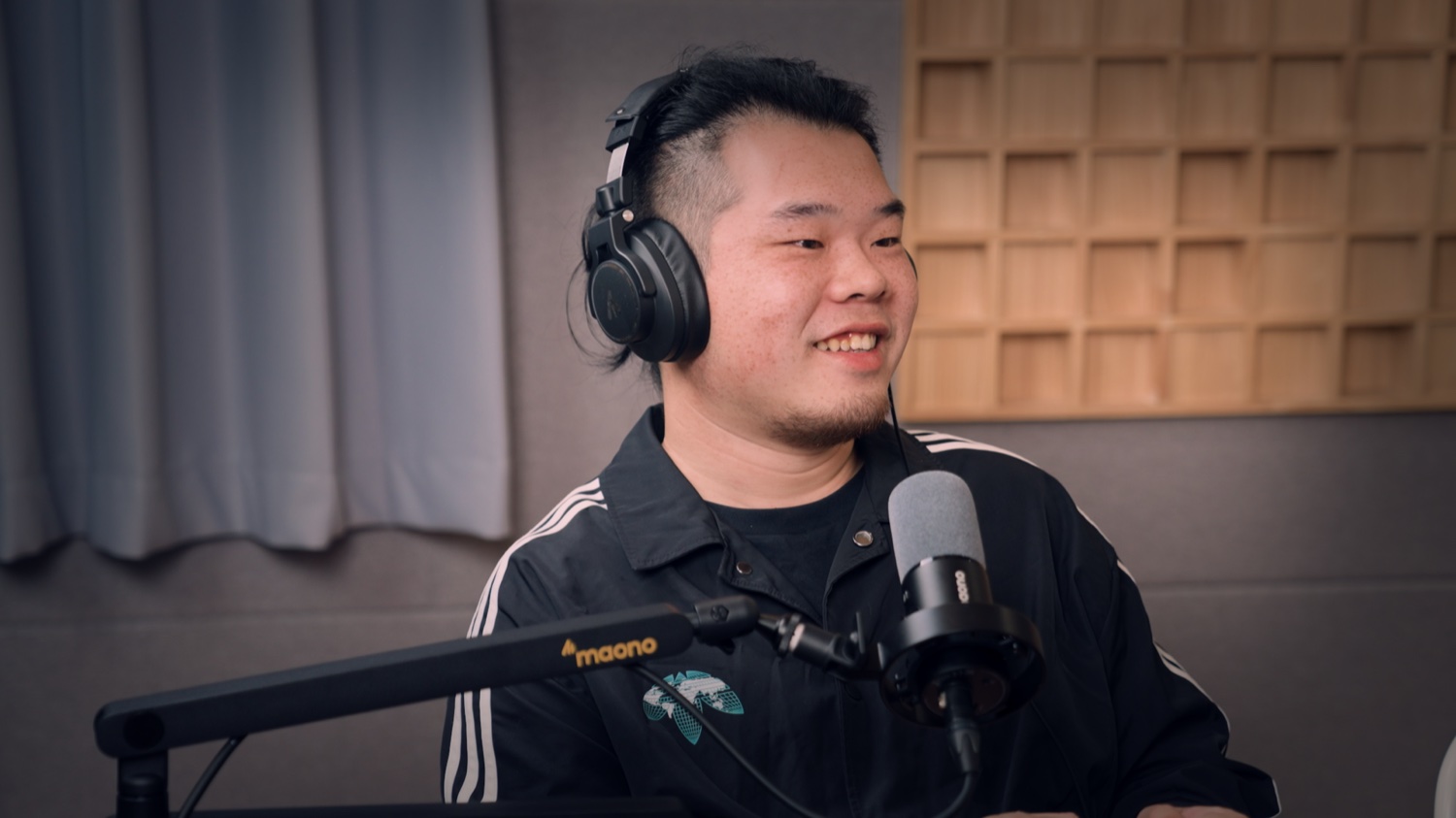
Jacky Dong
24 years old. Building smart pet toys to solve the loneliness problem for millions of dogs left home alone. Used AI to scrape and analyze millions of social media comments to validate the market before building a single prototype. Part of InnoX Academy (founded by a DJI co-founder). Featured at CES 2026 and covered by CNET. Target market: USA.
Jay
Originally from Korea. Studied her bachelor's in Harbin, China. Previous pet tech internship experience in Korea. Recruited through InnoX Academy's internal platform. Brings cross-cultural perspective to hardware development in Shenzhen, gathering international user feedback and bridging the gap between Chinese engineering and global markets.
So my dog Einstein, he was very happy when I told him that we have you as guests today because he loves to play. He's a Labrador, you know, he's like five years now but he's still like a five months baby. Very, very, very playful. Okay. My dog can't. Can't wait to come to China after I was telling the story. So I'm really looking forward to it. Yeah. So you both are very young and we will explain
what you do a little bit later. But first, I'm really curious. You're 25, right? Yeah. How old are you? 24. 24. Oh, very young. Yeah. We're so old, Michael. We haven't achieved anything in our lives. That's true. That's true. You see, this is crazy. Like, the people we talk to here on this podcast are all very young and they already have investments
like big VCs and accelerators invested in you because you have a great product. So. And we are just sitting here and asking questions. But it's not only about great products, but also great people. That's why we have. We are happy to have you here and find out a bit more about you and, you know, your vision and your inspiration. Yeah. So when did it start? When was the.
So we will ask Jacky first because you are one of the founders. Yeah, yeah, yeah. Of PePeHola. Yeah. PePeHola. Is it the same? Did I say it right? Yeah, it's right. PePeHola. PePe. Hola. Okay. Sounds very Spanish. Yeah, it is. PePeHola is in Spanish, right? Yeah. Hola. Yeah. So when did you first have the idea to say I need to build a product for pets or for dogs? Now it's for dogs, right? Yeah.
So when did it start? It's from 2024. October. Yeah. So me and my co-founder want to do something for the pets because we guys have so many pets. Yeah, I have five cats. Yeah, he has three cats and one dog. So we spend a lot of time with our pets and we have a lot of problems, want to fix it. So we want to do some new hardware to fix that problem.
Yeah. What was one of the main problems that you had? Yeah, the first one is I spend a lot of time in my workplace and I don't. I just want to play with my pets because they are so lonely at home, but nothing to do. Just sleep and eat and nothing to do. Yeah. And you know, in Asia, we guys the rooms are so small. Yeah. They don't have so much space. To run, to play. Yeah. So they are so lonely.
We want to fix that problem. We want to do something for it. Yeah. Just like the remote play. Yeah. We want to control something remotely and to play with it. Yeah. This is the first problem. Yeah. Although I have to say, just sleeping and eating that sounds like perfect life to me. I was very jealous when I look at my dog and I was like, oh, you don't have any problems
you don't need to earn any money, but you live the best life. Yeah, yeah, yeah. So and now you also, you're part of InnoX. InnoX is an accelerator and VC. We also had other guests from there and it's actually a big thing we have to tell people because InnoX is also quite young. It also started like two years ago. Yeah, but they are. The founder is actually a co-founder and shareholder of DJI.
Everyone knows DJI, right? Yes. And he's a professor also and he built InnoX to support people like you have an idea, but maybe don't have the network don't have the access to funding, don't know how to start and. And they do all of this for you? Yes. But there's also a big problem that a lot of people know that he is a crazy guy. He's a big guy. I mean, DJI is a worldwide recognized brand.
Right. So, and in China, even more people know him. So a lot of young people, very talented people like you guys want to go there and want to start their own company want to start their own product, hardware or software with them. So how was the application process to become part of InnoX? All right, you want to be one of the. Part of InnoX, right?
Yeah. Because they have a camp, like the summer camp and winter camp in the InnoX. Yeah. You can apply on the WeChat or something else like their website. And there are so many students, you know because the InnoX only accept the application of the people under 30. Under 30. Yeah. Age 30. Okay. So just for young people. Just for young people because they want to do something.
Innovation. Yeah. They think the innovation is belonging to. The young people, younger generation. Yeah, yeah. It's a very sad thing to say. Yeah. Okay. Yeah. But you know, the young people have something bad like they don't experience anything. They don't know anything. Yeah, they just the idea, they just understand something like what I want to do, but how to do, I don't know. Yeah. So yeah.
How do they choose people like you when you apply and when like how do they get the feeling of okay, you have the best idea, you have a good idea You're a good guy, I want to support you. Yeah. But this is not enough, you know, because so many people said they have the idea. They want to earn money or doing something, but actually they are not to do something. They just say it. But for me, I,
even if I don't have something, I, I don't, I, I'm not doing something. But like I start up a company maybe two years before and just doing the app, app and website and mini programs, something else, just I do something I want to do. You did it by yourself? Yeah, I did it by myself. I want to do. And I actually do it. Yeah, I actually did it. And so many people love my product. Yeah. Like the app.
Yes. So maybe this is the reason InnoX choose me. So they want to see real action. It's not just words. But you already did something. Yeah. Not just saying you need to do it. This is the first step. And the second is, you know, something like the hardware, you have to know hardware. This is the second step. So hardware is a part or is core for the InnoX Academy or Academy. Yeah.
Maybe because the InnoX is only support someone who want to do the hardware. Yeah, only for the hardware. If you do something like only software, they will not support you. Yeah. And I think it's very smart because it's the strength of Shenzhen. It's such a close ecosystem between the suppliers, the manufacturers, the software development. I mean for hardware you also need software.
Yeah, yeah, yeah. And hardware is also a big strength here in Asia. Right. So it's very interesting. Yeah. And the part of you saying just do something, it's the same what we always say. You can plan a lot of things, but if you don't do it, like you will never know if it works out or not. And there are so many manufacturers around Shenzhen. Right. Like Dongguan or something else.
Yeah. We are so convenient to let our product become true. So they provide the access also to the factories and help you to find the right parts. Corporations with the manufacturers. Yeah. So Jay, you moved here to Shenzhen from Korea. How do you like Shenzhen? Actually I was in Harbin for four years because I did my bachelor's in Harbin and because he asked me to hire me. How does this happen?
Where did you ask her? InnoX from InnoX from InnoX. So you have an internal platform or. It's like a system of InnoX. There are so many students. I mean, I also uploaded my resume in LinkedIn or other platforms. Okay. And maybe InnoX see my resume and because I had internship one of the pet tech company when I was in Korea. So they feel like, oh, she is.
She can be like really, really good at this team. So, InnoX suggest him to hire me. And he asked me. Okay. And that was when. That was like this year. July. August. Yeah. So. And now you're here in Shenzhen for a couple of months. Yeah. How. How is work and life in Shenzhen? It's so amazing. I feel like, so clean and there are so many people and the buildings are so high. I love this place.
And is it also a lot of pressure? Kind of. Because I feel like there is nowhere to go for hangout. Yeah, I have to tell a story. The first time I came here to plan this podcast I met with the people from InnoX and the one who was responsible, I told her, okay, I'm very grateful that you give us the context that you support us. I really want to treat you to a nice lunch.
And then I asked her, so where can we go? I asked her, where can we go for lunch? And then she said, McDonald's, what the heck? Like, I live in Shanghai. Shanghai people will go to French bistro or whatever have some nice wine for lunch, for sure. But then they said, yeah, we are normal. Like, we are only McDonald's people. We eat McDonald's. And then we went to McDonald's. And I said, oh, okay.
This is Shenzhen. Wherever you go, there is only companies. Only companies. So many buildings and nothing, nowhere to go. Yeah, yeah. And then you had this idea and you got accepted by InnoX. So there's like thousands of people right, who apply for this. And then they said they want you. And what is the next step? What is like one, two, three steps? If you want.
If I myself want to build a hardware product in Shenzhen how would that work? How would it work? Okay, well, the first step is giving the application to InnoX and then join their summer camp or winter camp. Yeah. And they will teach you how to make a product step by step. Let's skip this. You teach us without InnoX. I myself, I want to do a product in Shenzhen. How do I do it? Okay, I got it.
So the first one is you need to know the problems the real problems, which problems you want to fix. Yeah, it's like the pets are bored or something else. Whatever. Yeah. And then just do the research online and offline and do so much research. Yeah. But you do the research on what kind of problems exist or how to fix a problem. Like how. How do you even come up with an idea of a problem?
Like I don't know, sometimes it's also very very hard because you. Even though I spend a lot of time with my dog it's very hard for me to identify like a real problem because you know, I'm playing with my dog all the time and how do I really identify the problem? Yeah. Okay, well I think the problem is something you don't like. It's like my co-founder has a problem.
Yeah. Because his cats are always sick but he doesn't have much time to give the medicine or nutrition to his cats so he wants to make some kind of feeder. They can mix the food and the medicine together on time and in the right amounts to give the medicine and food to his cats. This is the problem because he is so busy. He's so busy for the work or for going to somewhere.
I think the basic problem we have is that we lack this entrepreneurial spirit because we also had other guests. Wherever they go, they see business opportunities. Right. So I think the entrepreneur, they have it. When you see a problem, you think, number one how can I solve this problem for myself? Number two, how can I sell this idea or the product to other people?
Right? Yeah, well, you know, just like the research is something to find how many people have this problem? This is. Yeah, this is the meaning of research. So how did you do it? Well, the first is online research like the Xiaohongshu the social media. Right? Yeah. To search like. My pet. My pet is bored. Yeah, pet is bored. And see how many people say that and see the comment.
And we will catch the comment out and bring this data to AI to analyze. Yeah. How many people have this problem and how do they fix that problem? Yeah. So how many have this problem? Oh well, so many. So many. So, so, so many. Yeah. Because there have some video say their dog is so bored and they have how to say 2 million likes in their videos, the same problem. Yeah, 2 million.
Like actually for me it's also an emotional thing I have to say. Like my dog, I have a big dog, a Labrador. Right. And now I'm also very busy because I come here to Shenzhen to make this podcast and he's in Shanghai so I have friends who go there twice a day, take him out for a walk and to pee and poo. But sometimes I think it's not enough because there were days or
there were times like one or two years ago where I had a lot of time and I take him for walks for like 10 km a day, but I cannot do it now. Sometimes I feel really bad for him. So I also have this problem and I guess like all of the pet owners have it. Especially when you live in China and you have to work so much. Yeah, especially in Shenzhen. Yeah, yeah, yeah. So I will not move here.
Just stay in Shanghai. Because when I move here, it's just working all day and eating McDonald's all day. Yeah, yeah, maybe. You know, I spend maybe 10 hours, more than 10 hours for work a day. Yeah, maybe 14 hours a day for just working. So I don't have much time to play with my pets. And you can't bring the dog to InnoX Academy right? Yeah, I used to bring. Oh really? Yeah.
But they piss in the office. There's another problem you could solve. Yeah, yeah, yeah. It's another problem. Yeah, yeah, yeah. Because dogs are not like cats. Cats will find out the toilet. Yeah, yeah. But dogs cannot. You have to train them. Yeah, yeah. It is so, so hard for new people who have a dog for the first time. Yeah. It took me a lot of time to potty train. Yeah, yeah, yeah.
Same, same, same, same. Also a lot of people in the west, they cannot imagine. It is a totally different approach if you live in the. I think I lived on the 25th floor. So for a puppy from the 25th floor to bring downstairs to the garden, it doesn't work. So the first thing I taught him was to pee in the crate and then poo in the crate. And then I had to teach him, okay now you can do this.
Don't pee on the carpet. And then the next step would be go downstairs when he was like six or seven months. So it was like I was always carrying Yumi down there. Yeah, but then he peed on your cupboard already. Yeah, yeah, yeah, yeah, of course, of course. So now you have the data. You have like comments with 2 million likes. People all say, okay, my pet is bored.
Then you said you put it in AI or you analyze it with AI. How does this work? You know, the data of like the social media comments are so many. Like we catch 1 million data or something else. Yeah, so many data we just break it up and put one by one to the AI and tell them, teach me what is The most important problem of the people say like the pet is
boring. And they have how to say 100,000 people said they're boring. And 200 people said their dogs are getting sick. Getting sick or something else. They have a quality of the problem. How many people said. So you used basically ChatGPT to analyze. Yeah, ChatGPT to analyze, exactly. ChatGPT is so great. Yeah, yeah. For the company or something else?
Yeah, yeah. It's the same like when I do social media what I did, like I analyze other podcasts and say how do they do the title? What are the titles of the most successful episodes? And then you can learn from it. So it's definitely a great thing. So now you have the cleaned up data right. You have like 100,000 comments. Talk about my pets are bored.
100,000 talk about my pets are sick, I cannot take care of them. What do you do with the data then? Or how do you come from the data from the problem to the hardware product to the idea? So, well, you know, the first step is collecting the data and the next is finding what is the real problem and finding the guy who have the problem. Actually have the problem. Just talk with him. Talk with him.
Yeah. The important thing is understand how did they solve this problem right now and if this method is enough for them for themselves. Yeah, yeah, yeah. It's like I said, my dog is bored and I bring my dog to the dog park or to something. Yeah. Dog school. Yeah. Is that enough for you? Yeah. So actually you check is there a product market fit or have people already found solutions on their own?
Right, because we think the product, the perfect product is something like to make your customer thinking come true. I have imagination. Like my dogs are so happy and I play with them all the time. This is my imagination. And the products need to fix, need to make this imagination come true. This is the product's meaning. Yeah. You know, the vision. The vision. Yeah. Yeah. So how is it in Korea?
Is there a big difference about the pet market in China and in South Korea? I feel like it's almost same because like this is not only in Asia but like all around the world there are so many pets and it becomes our family right now. Not only for dogs and pets and, and we started care about not only just their health, we started care about their emotional feelings how they are.
Yeah. So like how the technology makes our pets feel better is one of the key of next pet tech future. Yeah. And actually pet tech, it's crazy when we're talking about numbers. Have you also done a market research on how this market will grow globally? I mean it's already very big in the U.S. right. So now your first target market is the U.S. Is it true? The U.S. the USA. USA. Yeah, yeah.
America. This is your first target market, right? Yes, yeah. But also in China itself, it's also a big market now, but it has so much potential. Like in 10, 20 or 50 years it will it will be huge. But right now it's huge enough in China. Yeah, yeah, yeah. Because so many dogs, like how many is it 50 million dogs in China? Yeah, yeah. 50 million. Yeah, maybe, yeah.
And the thing is like people don't have any idea. There are always these stupid things about dogs and pets in in China. But actually it's like when you go to Shanghai there's one number I read, I'm not sure if it's true. We have to fact check this, that now there are more dogs or more pets in Shanghai than children below 5 years old. So there's this. It's a huge market.
So yeah. And actually when you go in Shanghai there's so many. Most of them are small dogs like poodles and so on. But there are more and more big dogs in Shanghai. And then you see these pet stores, pet shops, veterinarians and also salons for going to wash them. So in China it's a huge, huge industry. Yeah. Like the cats and the dogs are so many qualities in
China, right. And so many people are doing something for cats because cats are so. Are getting more. But we doing for the dogs. Yeah. Because we think like the dog have many activities or they need to. How to say, emotion. Yeah, the emotion need is more than the cats. Yeah. Cats, they don't care about you. Yeah, yeah, yeah. I'm the king of the world. Yeah, yeah, yeah, yeah, yeah.
It is, but dog is like you are the world. Yeah, yeah, yeah, yeah. So this is the part of there have so many problems from it. Yeah. People want to make something come and choose. Yeah. So you did the product market fit and then what was the result of it? What did you find out? How do people solve these problems? Just, well, you know the first one is the dog school.
The second one is to hire someone into your house to play with the dogs. Yeah. Play with the dogs or walking dogs? Yeah. And the third one is they coming, how to say, when they are walking, when they are working hard and in the lunchtime they just coming home as soon as possible. But it still is a problem for their customer, for our customer, because they think it is. So how to say, ma fan.
Yeah, annoying. Yeah, yeah, yeah. Very annoying. Yeah, yeah. Ma fan is a very good Chinese word. There's no good translation. Yeah. I don't know how to say it. Yeah, yeah. This is also a word that our English speakers should learn. Yeah, yeah. It is annoying and it's like. Yeah, it causes a lot of work. Trouble. Trouble. Trouble. Troublesome. Yeah. So then you are.
Now, you know, okay, there's still a lot of trouble for the people. And now you have the idea. Now you know what the problem is. So what is the next step? How do you come to the idea for a product? So, next step is you have to know which hardware you needed. Like our motor, because we have. We are a ball and running around. Around the. Yeah, let's show it. Yeah. Okay. So we have the product here.
This is the. The finished product. I haven't seen it before. It is from here. From here. Okay. Yeah, it is so. The remote. So this is also a prototype right now right? It's not. Cannot use. Not on the market. Yeah, yeah. Just appearance. Okay. Sorry. Yeah. So this is not. We cannot show it right now, right? Yes, because we are still testing right now. Okay. So it will be on Kickstarter in 2026.
February. Yeah. So the next step is. But how did you come up with the idea for ball? For ball. Because the ball is the most selling on the Amazon. Yeah. Because the best seller. For. Best seller. Yeah, for dog toy. It's interesting how you did the market research. So you go on social media, check for the problems and then you see how they solve it and what is actually on the
market, like the most common toy. Right? Yeah, yeah, yeah. And then you said, we will make it better. We need some technology because we're in Shenzhen because we actually do a lot of design for these products. Yeah, you know, it's not just, how to say, simple products because you know, this is a cover and you can put it open. Yeah, the dogs can bite. Bite on it.
Okay. Yeah, because they like something soft, chewy. Yeah, yeah, yeah, yeah. So if they bite only this one, it's it's so hard. Hard for it. Okay, so we have to describe it. What we have now, here we have a ball with a cover that you can take off and the cover is elastic. So dogs can chew on it. Yeah, right. Yeah. And then you have the ball inside. And actually they can it can open it.
Yeah, they cannot open it. Cannot open it inside. Okay, but only just for the outside because this is just prototype. It is. So will there also be something inside? Like it's like a little big car, like an engine. Yeah, yeah, engine. Yeah, engine, motor, engine. Yeah, yeah, yeah, it is. Yeah, so and then we also have the remote control. And the remote control you take to work with you or
yeah, whatever, you take it wherever you go, even if you go out of your country. Oh, really? Yeah, yeah. But how does it connect? Using WiFi. Yeah. The ball and the controller are still using the WiFi to connect, but. Then they are connected through an app. Yeah. In an app. Yeah. So I use this controller to control the ball. The ball can be in China, I can be in Germany.
Yeah, whatever have to be in the WiFi connection. Yeah. They will be connected through the app. Yeah, yeah, yeah. But why do you need control? Why don't control through the app directly? Yeah, yeah. Because we think so many people have their pet camera. Yeah, yeah. Because we think if you have the camera. So I don't want to do a new camera for you. Sure. So you can use your own.
Otherwise you will have two phones. Yeah. For checking, for checking the video on the video. Yeah. You can also use like this for through your app. But because like if they have a pet camera they have to see their pets. Right. So that's smart for like this, like they're watching their pets and we can like interact with pets like this. This is what we. Yeah, yeah. It actually makes sense.
Yeah. We want to save the money. Yeah. For our customer. Yeah. You don't have to buy for cameras. Doesn't make sense. Right. It's not part of the scope of your product. Product. Project. Okay. Wow. So how did you think of something like this? Well, how do you say? Like at first we realized that there are so many dog owners who already have pet cameras. Yeah, we do. Yeah, yeah, yeah.
Include me. Yeah, yeah. And the big problem of pet camera is so passive. We can just see them, but there's nothing to do. Yeah. I mean, some, you can talk to them. Right. I have one I can just throw. Even from China, I can throw some treats through the camera. But that's it. Yeah, yeah. So then, then you, you realized it, right? So they have pet camera.
And then you said, okay, instead of controlling through the app, we will make it as a remote control. Yeah, yeah, yeah. Because they already have 90%. Yeah. 90% of customers have their own pet camera. Yeah. So I. We don't have to do another new camera for them. Yeah. So, so we just create a controller and the controller, you can even take outdoor.
Yeah. If you are out of the working place and you take your dog out the door and you can take our controller and the ball together. And also we wanted to make like for using this, we feel like playing a game. Yeah. So the controller, we have to explain to the people who don't watch the video. It looks like a bone. Yeah, yeah. The bone is very cute. And then we have like one big button.
It's like on a Nintendo. Right. Where you. The controller and then you have four small buttons. Right. And there's also some speaker inside or. Yeah, yeah. There is like sound mode. Okay. There is sound mode, lighting mode and crazy mode. So you can talk with your dog also through the remote. When this product is ready, what will it do? What will it, what can it do?
Just roll around or can it also jump or. Yeah, jump or. Yeah, or there is lighting and crazy dog mode and what else? And the sound mode. Yeah, okay. Craze mode. Yeah. Craze Dog mode is like how to. Say, it's like a jumping automatically FaceTime. Yeah, yeah, yeah. So what is your, what do you do for this product? What is your task? My task is because we are targeting America
but they just know only like Chinese market. Yeah. So I'm trying to do like gather some other foreigners opinion about this product to make this one better. Yes. So you do the product discovery. Yeah, yeah, yeah, yeah. Okay. So and then the hardware part. Let's go back to the hardware part. So you would put. You were saying you have the idea and you said.
Okay. Ball is number one bestseller in the pet toys category. And how do you find factories or suppliers who can build this for you? We can find the InnoX. They will support us. Yeah, okay. Yeah, yeah, yeah. But for me, like I have no connection to InnoX. Like me, I want to do pet for myself. Wow. This is maybe so in Taobao. Maybe. Okay. Yeah.
But their quality, you don't have to know their quality. Yeah, right. But InnoX, they can filter, you know because they have so many factories are cooperate with InnoX. Yeah. You know. Yeah. So I think this is what we always said. Like we have the resources, we have like what we provide to the people. It's like it's really insider knowledge. Right. You don't get it anywhere else.
This is why we really love to talk to guys like you. Because this is stuff that if you go on Google and look for a supplier in Shenzhen, you find. I don't know if you find the best ones. Right. It's still very important to know the right people here in China. Yeah. If you do something hardware just by yourself it is so hard because you need money. Spend a lot of money.
The minimum quantities in the beginning are quite huge. I guess if you don't have like a certain contract or something already for existing products. Right? Yeah. The first one is that you need to test. Right. So you have to do the PCB and something like the motor or sensor or something else. It is easy to get something from Shenzhen but maybe it's not easy from the other.
From the foreigner or something else. Yeah. Even if you're in Shanghai, it's totally different. Right. You would guess it's all in China same country, but it's a huge difference. Here in Shenzhen you have the ecosystem, you're very close to the suppliers, you're very close to the software providers. Yeah. So it's much easier. Yeah. And there are so many guys who have their technology skill.
Yeah. They join us and they help us. Then they help you to design because I wouldn't know like what is the perfect size of the ball? You know some. I don't know if my. My dog is probably too small for this. For this ball. I don't know. But how do you come up with like the perfect size of the ball? Like the first product. Are you an engineer yourself or you have.
I just designed this product and ask the. The engineer to. To make it come true. Yeah. Also the engineers then part of the whole InnoX ecosystem or academy. No, there are some students like they have. They are in engineering and they join us to make some demo for us to show everybody if my idea is enough. And then we find a professional engineer to make it come true.
So there's not just support, there's also a lot of criticism. Right. Or they just test it. The first step is demo. Demo is very important. Yeah, you know, they have a MVP. Yeah, is it? Most visible? Minimum product. Yeah. Yeah, it is. So this demo is very important. It is only created by a student is enough. Yeah. So I have idea and I totally understand what I want
and I find a student to make a demo for me and I show to my customer and feedback one by one. Yeah. Step by step. Yeah. And you said before that normally for hardware it takes two years. Two years to come on the market. And you are actually quite fast. Right? Yeah. You started in October 2025 and then you will launch the Kickstarter in February 2026. So it's one year and four months.
Yeah. That you did it. And will it also be in mass production in February so people already can buy it in February? Yeah. Can buy it in the Kickstarter. Yeah. Oh, wow. So how did you Then the next step. Now you have this one. How do you go find the right So you find the right factory through your connections with InnoX. Right. And then you go to the factories and check if they can do it.
Yeah, it is. And there have so many 3D printing machine. You guys know this is 3D printed. Yeah, yeah, 3D printed. Oh, wow. Okay. Yeah, it is. So the first prototype is basically just a 3D print. Yeah. From like the drawings that the engineer provided to the factory. Yeah. Just showing to our customer, like this one controller or the board is. Yes, the 3D printing.
Yeah, yeah. Wow, that's super fast, right? Yeah. 3D printer is also something we have to talk about in this podcast because I just saw the biggest Kickstarter campaign worldwide in history was like US$64 million for a 3D printer. From here. Yeah, from Shenzhen. From Shenzhen, yeah. The biggest Anker. Yeah, Anker. Yeah. It's crazy. Yeah, it's crazy. It's like a painter painting. Yeah, yeah, yeah.
We have to talk about 3D printer. Yeah. So in the future, will people also be able to print this whole thing at home with a 3D printer? No, no, because they need the engine also. Right? Yeah. We found a factory and they are professional to do the 3D printing, make this product for us. And this factory also close to your offices here? Yeah, yeah. In Shenzhen.
Yeah. So it's like this is why Shenzhen can be so successful right? Because everything is so close. The people are here, the talents are here. There are so many engineers here. Then you have the support from the government from the authorities. Then you have the users here, people. Who can give you so many users. And then you have the factories here. Yeah, factory. Everyone can support each other.
And you have McDonald's and KFC. Yeah, you know, the customers and the money we see. Right, and the factories. Yeah, the money, the funding is also very important. Yeah, it's all from Shenzhen. Yeah, yeah. I heard the story about cafe cafe, cafe next to the DJI offices where the VC people are sitting around and trying to listen to the people. People who are, oh, can I find the next DJI here?
Or can I find the next Elon Musk here? So, yeah, it's. It's crazy. Like for me, even, like I've been living in China for 10 years, but coming to Shenzhen now and getting a feel of this ecosystem and the tech technology here It's crazy. For me, it's still super overwhelming. Like, I came here only half a year ago. And it's like completely different to what I've experienced so far in
Germany. Like, you know, there's no such ecosystem or any government that would support you in something that you want to do. I mean there is still like in Germany in Berlin you also have these startups. Ecosystem. But the unique thing is here, as you said it is an ecosystem. It's like everything in one place and everything moves so fast.
And then you have like these 20 something year olds sitting here and showing us. Yeah. Pet toys or barbecue grills to the over 30 ones. Yeah. Won't be able to be. To be part of that stuff. Sorry. Throwing sentences at like only people under 30 can be. Sorry. Okay. Yeah, yeah. So now you have this prototype and what is the next step to go into mass production.
Mass production. Like mass mass production. To make a lot. Make thousands and hundreds of thousands of this. I got it. So the next step is testing. Yeah. You have to know the percentage, the percent. Because for example, if you make hundred of your products how many products will break? It's like 10 or 20 or 30 or something else. You have to know it. Yeah. This is the meaning of testing.
Right. So if you control the percentage to 1%. Yeah. If you make like you. You make hundreds of products and less than 1%. Yeah. One broke. You can make more. Yeah. Okay. Ask the manufacturers to do more. Yeah. And selling. So you test yourself with your. With our customers around us. Okay, so basically when you do the crowdfunding on the platform, people get this product when they invest.
Right. They get this product and then you interview them and gather more feedback from from these people. Yeah, because they have a lot of dog feeders around us, like there are maybe hundreds of dog owners. Yeah, around us. Yeah, we can ask whatever I want to ask. Yeah, because they are so how do they do it here? So they're very passionate. Yeah, they have passion for us.
Yeah, yeah, because we are doing something they need. Yeah, we have passion. We also have passion. Yeah, they actually need this product. Yeah, so they want to help us. Yeah, and also there is it's not just that you have the idea. You also get some sizable funding. Right, you have like investors who said they want to invest in your company. Yes. So how did that go?
Did they like your product or did you have to talk to a lot, a lot, a lot of investors until you found one? Or was it like the first one said it's a good product, here is my money. I think, well, the VC think the money is better than your idea. Yeah, you have to tell him how can I bring the money back to you? Okay, yeah, you give me three, like you give me three million and then I need to give
you 30 million. How, but how? You need to ask. You need to show me. So how do you do it? How? Maybe it's a secret. Okay, no worries. Yeah. But we hope that you can give them back 30 million. Yeah, well, whatever I can say is I need to do better and better products for our customers. This is very important. And then it's like the selling or something else to bring the 30 million maybe.
And this will be your main responsibility. Right. Understand. And how to make this product even better and show them how confident we are. Yeah. So one question I would have. Like if I play this with my dog then it may be interesting the first time for him. But how do we make sure that the dog does not get bored of this one? Because if he had saw it like for 10 times and I mean, my dog is Labrador.
He's not that smart. Yeah. But if you have a border collie for example, they're very smart and they said I don't know, I know this ball. It's boring already. Yeah. So how to say this is a series of for these problems, we need to like, I mean like this is our first product, right. And this is for just like fixing the problem who miss their dog and who want to play even if they're at the workplace.
And maybe we're going to like develop another second product to fix these problems. Okay. Yeah. So this is as you said, like just start with one product. Yeah. And this is a beginning. Yeah. Learn on the way because you have to pay back 30 million. Yeah, yeah. Maybe we will make a lot of types of this toy for pets and people. You can use people. Yeah, no, I mean like, I mean
for pets and the people for they Now when I go back to Germany now I will just use the remote to make you let it work. They have a new. Another problem. It's like if your dog is so bored at home they will break things. How to say they will destroy. Yeah. Destroy the house. They will destroy your home. The dog of a friend of mine is scratching the wall. Yeah, yeah, yeah.
Because it's like has separation anxiety. Like your sofa, your TV or destroy it. Yeah. So this is our next product named C1. It's like a smart collar that can detect what are they doing how is their. How they feel. Yeah, how they feel. Oh, wow, this is great. This is a big market. We wrote about it in our asiabits AI newsletter. So this. There's also a collar in the.
Which sold really, really well in the US they sold like I think US$3 million in three months. And they can feel like the anxiety level stress level. Yeah. Also the vitals, heart rate. Yeah, exactly. Yeah. It's like Apple Watch. Yeah. Like the Apple Watch or the Oura ring. Right. Track how they sleep. Yeah. This is. This is also a big market for the future.
Yeah. Because you know, there have so many collars for dogs. Oh, yeah. But they are not selling good. I think one of the problem is they just find the problem. They not fix the problem. Yeah. The PePeHola. S1. This ball is fix the problem. The collar find. They can know what they are doing and how their emotion is. Right. So you say we have this GPS collars. Yeah. So you know your
your dog ran away and you know where your dog is. So it just analyzes the problem, but it does not fix the problem. Yeah. So, but how will you fix the problem with the collar that my dog is bored at home. He's anxious, stressed. How can a collar solve this problem? You know, if if you guys have the collar and they understand the emotion of your dog because they feel extra excited or bored or
something else, the board coming up and play with them automatically. Automatically. Okay. Yeah. My dog is bored already. Yeah, it's already. Yeah, yeah, yeah. And this is the first toy. And if we got a lot of new type of the toys and they have so many toys come to your dog. Yeah, if they feel bored. Yeah. From a business side, it's also very smart. You solve problems.
And the best business is where you create some problems. You also can create some problems. Yeah, yeah, yeah, yeah, yeah, yeah. The collar is finding the problem because it's also important to fix the problems and make money at the same time. Yeah, yeah, true. Yeah, true, true. We not just only make the money. Yeah, we are also fix the problem. No, it's a it's a great thing. I mean, making money is
it's a good thing. Right. If you really can change the world and improve people's and pets to be better, animals to be better. There's no shame in making money. Yeah, yeah, it is. It's a good thing. Yes. And so talking about money, how much. What will be the retail price of this? The price, how you sell it on Amazon for example, or on Kickstarter. First is not ready. Maybe not ready.
Okay. Not ready. The price is not ready. Okay. Yeah. Because we just want to make our products better. Yeah. So you still don't know how much the production cost is? I know it, but I don't know the the price of selling. Yeah, yeah, I know the cost, but I don't know the selling price. Yeah. Okay. Yeah. So how do you plan to find like the entry point, like the entry level price for this ball?
I know the price of the appearance or the structures and also the button or the motor or the PCB or something else. Just pick it up. You know the cost. Yeah, that's it. Yeah. In Shenzhen is easy. Yeah, yeah. But then the selling price, how's the process of finding. Okay, whether I want to sell this now for US$50 or I want to sell it for 40 or even 70. How to know the selling price?
Right. Yeah. Okay. Actually, I don't know if I can say it. Yeah, you can just say like, is there are there people like supporting you like from InnoX or someone who can say they have experience on how to do it? Because this is also a science, right? How to find the right price for a product. Is it a premium product or is it. Yeah, I know the methods of the selling price.
Yeah. Because maybe it's the four times of your cost the selling price. Yeah, yeah, you know, big. It's like, for example, your controller cost maybe 10 yuan. Yeah. So the price of selling is 40 yuan. Yeah. Because also you have to finance all your research. You have to finance the cost you have here. Okay. Yeah. So but you have like people who can help you to find a price that works.
Right. Or you just do it yourself. What does it mean? Sorry? I mean like, do you have people from InnoX or whatever? Do you have mentors who say we help you, we have this experience, or you have to learn it yourself how to find the right price for a product. Maybe just by myself. Yeah. InnoX will not tell you. Yeah, yeah. Because they just tell you how to, how to say, how to find the customer.
Yeah. How to do the functions or something. Just. Or give you the money. But the selling price is your problem. Yeah, yeah. So you're actually like, you have to do everything that an entrepreneur does. Yeah, yeah, yeah, it is. Yeah. They. Yeah. So what is your plan for the future? How many products will you have in five years or in 10 years? What do you think so far? I think. Yeah. But right now.
So this is not a question someone in Shenzhen would ask, right? Yeah. People in Shenzhen, what do you do tomorrow? Yeah, tomorrow it is. Because everything has changed. Sorry for the stupid question. This is a very German question. Five year plan. Five year. Yeah, this is very German question. We like to plan ahead. We change a lot of plans during a year. Yeah, maybe, maybe a year.
One year before, we want to make a building or something else. Yeah, but right now we're just selling out. Yeah, it is very easy to change. So we just want to. Ready for tomorrow or ready for next week. That's enough for us, I think. Yeah, that's actually crazy. Like how do you find the right balance to say you also need a long term goal. Right, because you have investors, you have a team.
Because I think we are so young. Yeah, so our knowledge. You said it already three times. Yeah, we are all good. No, no, no. So our knowledge is always changing. Yeah, yeah, we. We got it. We learn a lot of new things. So, so maybe tomorrow or next week we are going to change together with our knowledge, yeah. Yeah, so I don't want to. I don't like to do something long schedule or something else.
Yeah, I think it is nonsense for me. Yeah, because always change. Yeah, always change. What I want to do is also. This whole ecosystem of InnoX is helping you because you're basically around people every day. Every day, other founders, other entrepreneurs. Right, who you know there? I, I bet, or I assume there's a lot of interaction also with these other founders and then you get a lot of ideas
like how do they solve their problems? Right, how is the interaction between teams in InnoX? Well, I don't think I am a boss or I am something else, so high level guy in the team. Yeah, because I think each guy in our team is the same. Yeah, the question was more like about the other founders the other founders. When you have other startups, other companies, other startups,
do you have communication with them? Yes. Yeah, so many communications. Like they have a team like doing something also for the pets. Yeah. They do the X-ray of pets. Yeah. They teach the doctor how to use the X-ray. Okay. It is just. Yeah, it is just software. It's like. I don't know if I can say, maybe just, just you have an X-ray, right, for your pets and your.
You upload this X-ray to their app and they will analyze what is the problem of your pets and tell you how to fix that problem. Then you don't have to go. You do nothing. Yeah. You do nothing. You just buy the medicine. Medicine. Or show this to the doctor. Yeah. Help me to fix that problem. Wow. That's it. That's actually quite cool that you have other companies in this whole
ecosystem of InnoX that are basically in the same or similar market like you. Right. So you can. Yeah. We always. Some ideas communicate. Right. Do you know the guys from the barbecue grill from Lema? No. You have to get to know them. They do really nice barbecue. Okay. And you can have good beef every day. The dogs will love it. So if you have one advice for young people under 30 who
want to do something similar, like you, people who are at university for example, right now, what would it be? If you want to do the hardware, especially, how to say, you have to go to Shenzhen. Yeah, yeah, that's it. That's it. Yeah. Wow. I was waiting for a big advice. Yeah. I bought my plane ticket already. So I came here this year. But I chose obviously the wrong. The wrong city.
I came to Shanghai because I like food and. Yeah, right. Yeah. Because I think it is so hard to do hardware if you have nothing. Yeah. If you are not living in China, not living just in Shenzhen it is so hard. So what about people who watch us or listen to us who are in the US for example, right now do you think it's possible to do something like this?
To build a hardware product with no Chinese knowledge just speaking English, can you also do it here? What do you think? I mean, we're all foreigners here, but we all speak Chinese. Honestly, I feel like at least they need to speak Chinese. I think because Chinese people, their English is not really perfect as much as I expected. And if I can speak Chinese really well
they were really like, oh, you can speak Chinese. Oh, you're a foreigner. Yeah. It's an opener, right? Yeah, yeah, yeah, yeah. It is so open. But also like one of our guests from InnoX they also solve this problem. They have like this translation hardware you put on your phone and whenever you send a voice message, for example in Korean it will translate it into Chinese.
The voice message with your own voice. With your own voice. That's crazy. That's also a problem that gets solved. Yeah. So the one takeaway from this episode is come to Shenzhen. Yeah, come to Shenzhen and look for yourself. So yeah. Jacky and Jay, thank you so much. Thank you so much. Very, very interesting. Wish you good luck. And if people want to buy it, we will put the Kickstarter
link into the description and people can check it out and support you. Thank you. Thank you. We will be also one of your first customers. Thank you so much. Yeah, thank you. So much.


Get These Insights
Every Monday
Join 18,000+ professionals who stay ahead with Asiabits. Every Monday, straight from Shanghai.