
He Borrowed $300,000 to Build a Physical AI Tamagotchi
"I believe I will do it." - Irving Gao, Sweekar
With Irving Gao (高鸿志), Founder & CEO of Takway AI
- Failure is just a data point. Irving shipped 200 units of his first product. After 30 days, only 1 person was still using it. He called it "the hardest day" - then went back to zero and started again.
- One course can change everything. A single gamification design class rewired how Irving thought about products. It led directly to Sweekar's core mechanic: a pet that physically grows over time.
- Nintendo of AI, not iPhone of AI. Irving isn't building a utility. He's building emotional value. The goal is a product people love irrationally - like a Nintendo game, not a productivity tool.
- Sweekar literally grows up. The AI pet starts as an egg, hatches into a baby, becomes a teen, then an adult - with an MBTI-based personality that evolves through every interaction.
- The DJI and Anker playbook: USA first. Western markets respect innovation and brand-building in a way China's home market doesn't at the early stage. Winning abroad first builds the credibility to win at home.
- CES 2026 was the proof point. When media saw Sweekar at CES 2026, the reaction wasn't polite interest - it was "Breaking News." That moment validated the pivot.
From USTC to a $300,000 Bet
Irving Gao is a post-2000 founder from Shenzhen. He had a guaranteed PhD placement at USTC - one of China's top universities. He gave it up. Instead, he borrowed ¥2,000,000 (approximately $300,000) in personal loans and started a company.
Before founding Takway AI, Irving interned at three of China's most prominent tech organizations: Unitree Robotics (known for their robotic dogs), SenseTime, and the Shanghai AI Lab. He had seen the bleeding edge of China's AI and robotics ecosystem from the inside - and he knew exactly what he didn't want to build.
"I believe I will do it." - Irving Gao
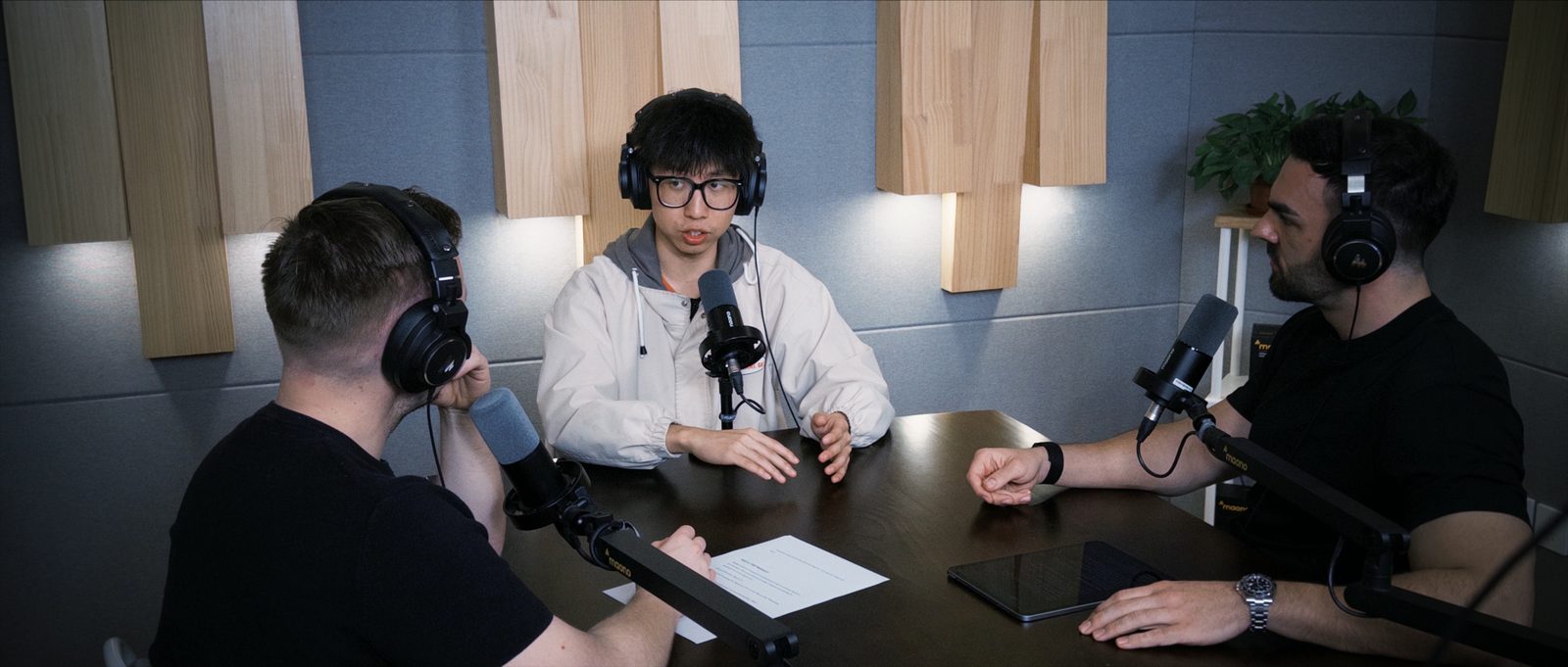
200 Units. 30 Days. 1 User.
Irving's first product was an AI robot. He shipped 200 units. After 30 days, he checked the data. Only one person was still using it. The product had completely and silently failed.
"That was the hardest day," he told us. Most founders at this point would pivot to something safer - or give up entirely. Irving went back to zero.
"200 units shipped.
30 days later, 1 user left."
Irving didn't quit. He started over.
The Course That Changed Everything
The turning point came from an unexpected place: a gamification design course. The class rewired how Irving thought about products - specifically about what makes people come back.
The answer wasn't better AI. It wasn't more features. It was growth. If a product visibly changes over time based on your interactions with it, you feel invested. You feel responsible. You want to see what happens next.
That insight became the foundation for Sweekar.
Sweekar: The Nintendo of AI
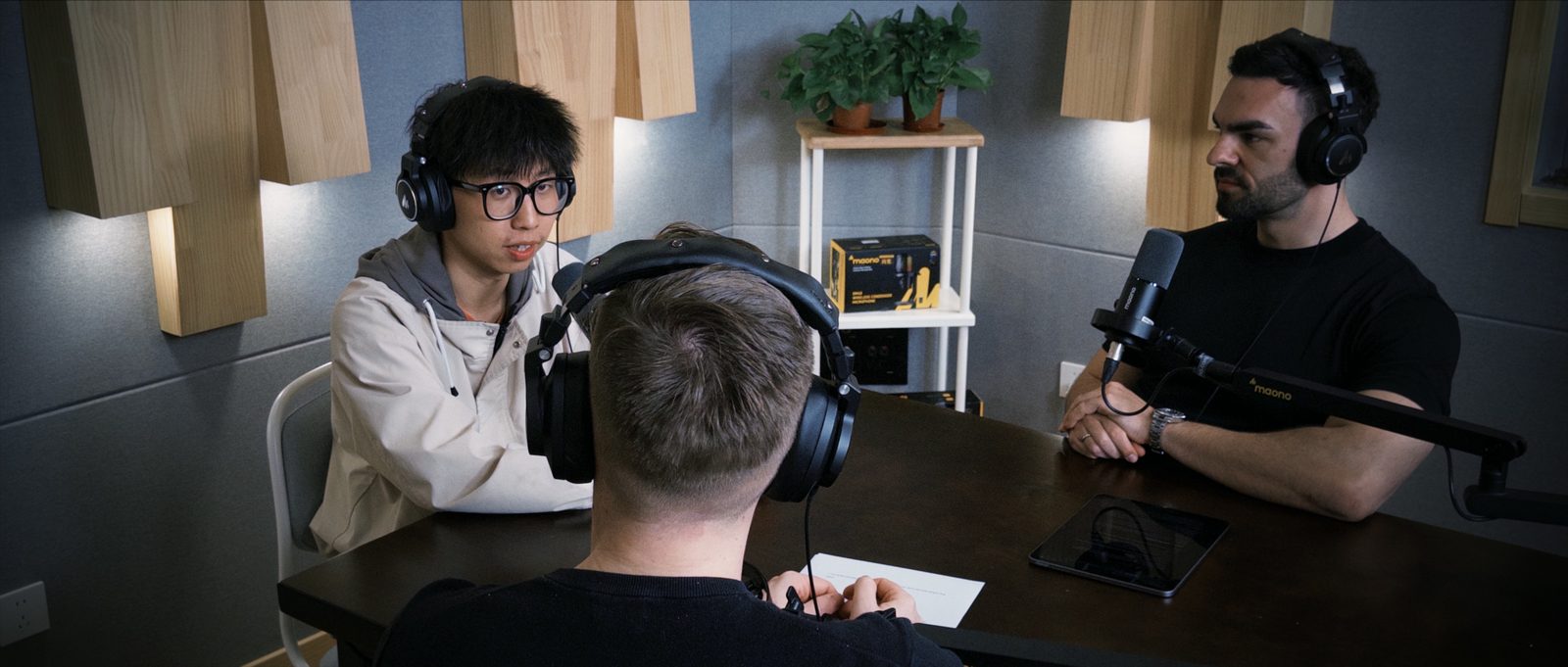
Sweekar is the world's first physically growing AI pocket pet. It begins as an egg. You hatch it. It becomes a baby. Over weeks and months of interaction, it grows into a teen, then an adult - each stage with a distinct physical form and a different personality.
The personality system is powered by MBTI. Every interaction shapes who your Sweekar becomes. Two people can have the same model and end up with completely different companions.
Irving frames the product not as an AI assistant, but as an AI companion. The distinction is intentional: "We're building the Nintendo of AI - not the iPhone of AI." The goal isn't utility. It's emotional value. The kind of irrational attachment people have to a well-loved game character.
CES 2026: "Breaking News"
At CES 2026 in Las Vegas, Irving debuted Sweekar. The reaction from media wasn't polite interest or measured skepticism. When journalists and editors walked up to the booth and saw a physically evolving AI companion for the first time, several used the same two words on the spot: "Breaking News."
That moment was the market validation Irving had been building toward since he walked away from his PhD.
Why USA Before China
Irving is explicit about his go-to-market strategy: the US comes first. The model he cites is DJI and Anker - two Shenzhen companies that built their global brands in Western markets before returning to compete at home.
His reasoning: Western markets - especially in consumer tech - reward innovation and brand equity in a way China's home market doesn't at the early stage. Getting Western media coverage, Western user reviews, and Western distribution credibility creates the leverage needed to eventually win everywhere else.
Sweekar launches on Kickstarter in May 2026, priced at $100-$150. Follow @sweekar_pocket_pet on Instagram for updates.
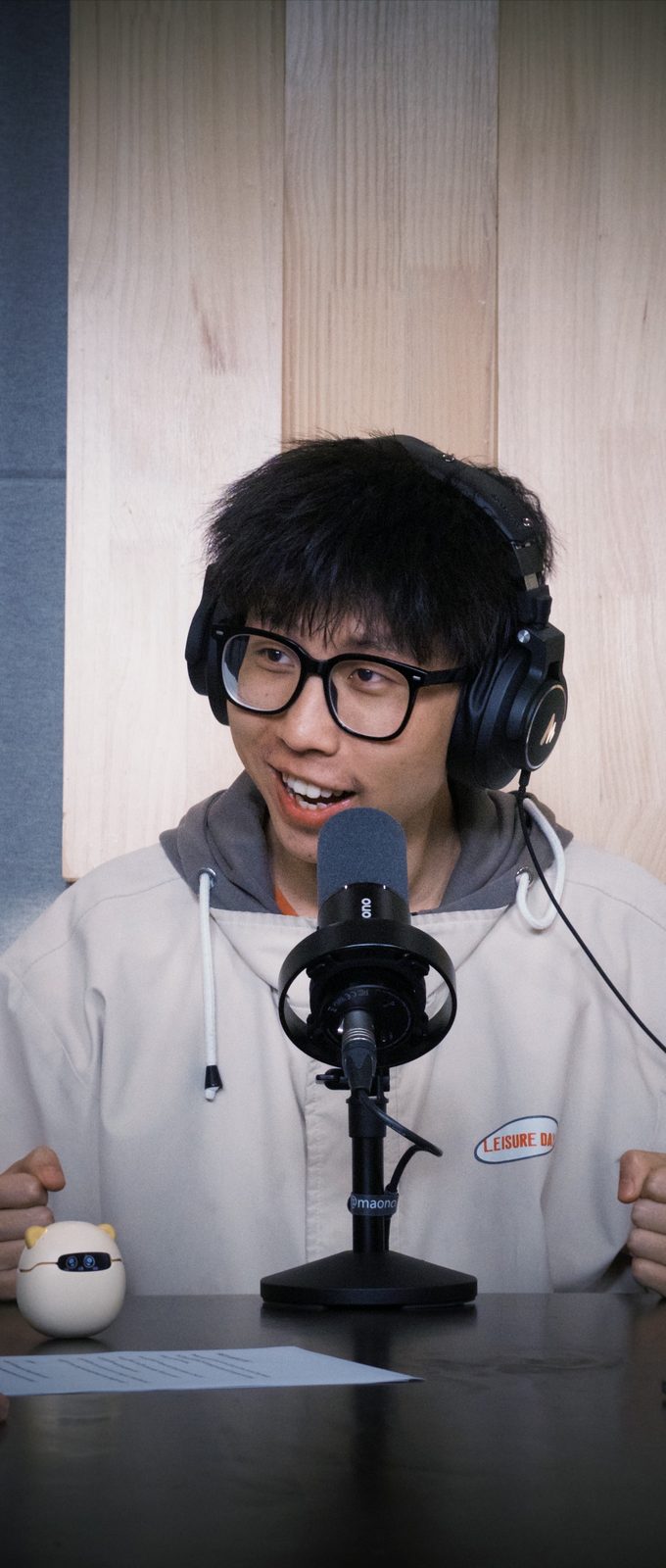
Irving Gao (高鸿志)
Post-2000 Chinese founder from Shenzhen. Gave up a guaranteed PhD at USTC to borrow ¥2 million and build the world's first physically growing AI pocket pet. Previously interned at Unitree Robotics, SenseTime, and the Shanghai AI Lab. Sweekar launches on Kickstarter in May 2026 at $100-$150.
You did something that most of the startups do in Shenzhen, in China. Like DJI did it, Anker did it. It's always America first. So they do the Bei Mei Shichang, the North American market first. Why is it that most of the companies do it and why did you do it? I think for America, or the overseas market, you know, except China, I think they really respect branding and innovation. But in China sometimes, some companies will just copy your ideas and do a lot of things.
So when we go abroad, there are people who love, who respect the original creators of these ideas. So they respect it. So I think the legal environment is always more friendly to startups. Conceptually. So we chose this. For our safety and for the branding. You are a very interesting guy because you made a very bold bet. You took 2 million RMB as a loan to start a new generation of Tamagotchi. Yeah, it is.
So I just thought about Tamagotchi. I think Tamagotchi is around 30 years old or something more or less. I remember when I was really, really small, like a kid, I always wanted to have a Tamagotchi. Yeah, it is. So when was the first time you heard about Tamagotchi? Actually, less than a year, actually. Because before we made this product, I had no knowledge about Tamagotchi. I knew more about the Chinese virtual pets, such as QQ pet, like this kind of stuff.
But when we made this product and we wanted to do a pet-raising robot - a robot with a pet-raising gameplay - we saw that abroad, in countries such as Japan, America and Europe, there are a lot of people who love Tamagotchi, and Tamagotchi is very similar to ours - the gameplay and concept. It's very suitable for our product. So I think "AI Tamagotchi" is very - it's a good description of our product.
So we chose this name and yeah, just like that. So you only found out about Tamagotchi when you did the market research of similar products? Actually, yes. But when we were making this product we found a lot of inspiration from Tamagotchi. So we learned a lot from Tamagotchi. Also, for marketing it's better to say AI Tamagotchi. Right. Because everyone knows Tamagotchi. Yeah, it is. You know, hundreds of millions of people know Tamagotchi and we are doing AI robotics.
But you know, Tamagotchi is purely virtual. We are bringing it to the physical world, giving it a physical body and giving it AI abilities. So it's much better to understand. So you also come from a robotics background, right? Yeah, it is. So you planned originally to do a PhD in robotics, but then you dropped out of your college - college or Gaokao or what? What did you do? Actually it's postgraduate. Postgraduate.
So from university. To start your own company. How was it to tell that to your parents? Because Chinese parents, they are really focused on education, right? Yeah, but I think my parents also, you know, ran a startup and ran a company, so they understand, you know, you take the risk in these kinds of things. But it can be acceptable. For example. So they would support you? Yeah, they supported me at first.
So how did you have the idea to start a startup in the AI Tamagotchi space? It's a long story. I think I started at the end of 2023. At that time I was a research intern working on multimodal language models at that time, and we saw a trend - GPT and Gemini, and at that time Gemini released videos about multimodal interactions with people - like drawing, and the AI would see what you're drawing in real time and chat with you and give you some inspiration.
That was amazing. At that time I just thought wow, it's fantastic and it will change a lot, and this multimodal technology will change all the interaction patterns between hardware and people. So at that time I saw this trend. And secondly, I saw the AI Pin. Do you guys know the AI Pin? Yes. That was also a famous product at the time and I thought well, that's so cool. AI Pin - P-I-N, AI Pin. What is it? It's from an Apple designer who just left to design hardware.
I think I heard, yeah, I heard the name. So what does this pin do? It can recognize things. It has a camera and a microphone and it can recognize everything and give you feedback. And they wanted to say, hey, want to replace the iPhone? Like, just use this one. Is it a little bit like - you know Loqi? Oh yeah. They also make this camera that records. Yeah, it's kind of similar hardware, but they have different definitions.
Okay. And then you saw it and then you said I have to do something on my own. Yeah, I have to do something on my own. And furthermore, I think emotional intelligence is more likely to succeed. So I chose emotional intelligence over efficiency intelligence, because a lot of companies and the big companies such as Google, OpenAI, they focus on efficiency - hardware like pins or something that can record and recognize and give you efficiency.
Basically. But for emotional intelligence there are no companies do it well before. So I have a lot of opportunities for the startup, so I chose this chance to do this area. But now the efficiency. So the trends from the interaction with what you're doing would actually lead into more emotional research that you did, or how did you come up with this? Actually, I didn't do a lot of research, but actually, for my own...
I think emotional intelligence is a natural demand of all humans. So I think it's a very natural thing. But before, the technology couldn't do it well. But after ChatGPT, for the first time people realized, oh my God, the AI can simulate human beings. Yeah, that was crazy. So I think this is a very important time for this technology, and all the products will come out. I hear more and more people using ChatGPT just to talk to someone, to have some interaction, rather than going to therapy.
Yeah, it is. And it's not because they don't want to go to therapy, but... If you are in Europe or in Germany, for example, to go to a therapist, it takes a lot of time, it's very hard and a lot of money. It's very hard to get a spot, so it can help you with it. And I think it's the same for raising a normal pet. Like, I have a dog, and when I come here to Shenzhen from Shanghai, I have to give it to someone to take care of it.
But this is... You can just take it with you. Yeah, it is. And it's easy to take it on the airplane. I take the airplane between China and the US and take it all the time. Yeah, it's very convenient. Nobody will charge anything. Yeah. And also, we also see a pattern here. A lot of times, a lot of founders we interview have this idea, they think it's a good thing because they have some observations from their daily life.
As you said, you think, okay, people are very interested in having emotional contact, and then they start building this product, and then they do the market research. It's not that they do a lot of market research before. Actually, at first it's not, but after starting the project we did a lot of research, step by step. So how big is the market? Actually, it's pretty big. Maybe tens of trillions, for the emotional intelligence and robotics combination and this new area.
I think in the future a lot of products will appear. But what is the actual market? Is it more the digital companion market, or is it emotional support? What are the numbers when you look at the market that you're in? Is it more the digital companion space or... like you said, the market is very big. But what market are we addressing here? Actually, I think it's more about the digital companion, but the physical digital companion.
So, hardware. Hardware. Yeah, hardware is important because just software is only in the virtual world. You cannot touch it, feel the temperature and all of that, you know, feeling. Yeah, it's totally different. And before you also, before you did your own startup, you worked for Unitree, you worked for SenseTime, you worked for Shanghai AI Lab. What did you learn there? Did this help you for your startup journey?
Yeah, absolutely. I think it was a very interesting experience for me, you know, looking back. At first, before Unitree, I already had a startup team and we were building robots that could, you know, plant trees in the desert. We worked on that for three years. And after that, I joined Unitree to work on a robot dog. It could guide blind people. To go out. Go out in the cities, like that project. After that, I went to SenseTime and the Shanghai AI Lab, for further research on autonomous driving and multimodal language models.
But after that, I saw the trend and went out, and I think it's pretty important that all the choices I made matter, because why I chose a startup company about AI and robotics... all of that gave me a lot of knowledge and experience in how to build a real robot and how to combine AI technology into a robot. That benefited me a lot. So what is it like to work in a big company like Unitree? Actually, when I was working at Unitree, it's not a big company.
When was it? 2021. Oh. So they got very famous with last year's Chinese New Year. Yeah. The robots were dancing. Yeah, yeah. So how was it in 2021? How big were they? Actually, for all the technical people, it was less than 100. So it's still small. At that time, I just thought it was a pretty interesting company and I wanted to go there as an intern and to do an independent project. I was the project leader, so I did this project on my own.
So I think it's pretty interesting. So you were the project leader during your internship? Yeah, sure. A lot of responsibility. It was an independent project, so I was basically the leader. The work was done by me alone. So it's a startup inside a startup. You can see that. Oh, that's... And what was your project about? The blind guide robot dog. Okay. For the blind people. Yeah, blind people. But then the shift happened.
As you said, this is also very much about solving problems of blind people, solving problems of planting trees in the desert. And then you said, okay, now I want to do emotional AI. What is the biggest difference between doing this kind of hardware - very efficiency-focused AI hardware - versus the emotional hardware? Actually, I think it's pretty different, because at the start of this startup and we also thought we need to find some problems and we need to solve the problems.
So at first we didn't do it well. And this AI Tamagotchi is not our first product. It's the second one. Before that we had a product. Maybe it's not — that product was not a success. It's just like a robot, but it can just emotionally talk with you and has 4G and you can take it everywhere and talk with it. But it's mainly for kids. So why did we do this? Because we, before, we just saw we need to solve some problems because at first we thought the emotional intelligence needs to go into the companion.
Emotional companion — this problem. So we thought, okay, which people — which people need the companionship. I think kids are the most. Because, you know, in China a lot of, you know, parents are working a lot and they can't have too much time to accompany their kids. So we just did this product. But after that the result was very bad for this product. And we crashed at that time and we didn't know what to do.
Because at the end of 2024, the end of 2024, we made 200 hand-made products and gave them to users to test. But they all hated it. Not hated, but after 30 days, just one person was still using it. So you can't take the product and go to market because nobody wants to use it long term. So the product was a loss. So at that time we were just confused about what to do and what we should do. And at that time we were confused, and at that time we just took a course.
The course was about gamification. Gamification design. And after we took that course, we learned more important things. Does the game solve the problems? Solve the problems? Does the game solve the problem? My answer is no, it doesn't solve the problem. But it creates a new experience. Because such as a gun game — you know, you know, playing a gun game — it keeps you engaged. You cannot shoot a gun in real life, but you can do it in a virtual world.
So this is a kind of new experience for people who can't get this kind of feeling in real life. So you can get this feeling in the virtual world. So this is why games can create a lot of value. So after that we just thought, okay, we don't need to focus on solving problems. We can also focus on creating experiences. So at that time we were saying okay, we want to create some experience that we — that our teammates really love to do, such as pets.
Reading — raising a pet is our hobby and we all love to do it. So we thought, okay — a pet, a virtual pet game with robotics. How do we combine these two things with AI? And after that we just started to explore this feeling field. So let's go back to the evening or the day when you gave out 200 of this first product to people and just one of them used it. And when you got this feedback, how did you feel at that time?
At that day, I felt very disappointed. Because I didn't know what to do. I spent a year on this product, but nobody wanted to use it. That was pretty big. I don't know what to say. Yeah. For me. So I think at that time I almost crashed. And I didn't know what to do. And you had like US$300,000 in debt, right? 2 million RMB. At that time I didn't take that money yet, at that time. Because that product I thought was not very good.
So I didn't have the confidence to take the money. But how did you then — but how did you then create or develop the prototype or even the real product? Like, how much time — you said it took one year. Actually the true time was about half a year to make the 200 products. So why did you decide to pivot, to start a new product, and why did you not say, I will go back to university and do something stable?
I think running a startup is a kind of lifestyle. I think this is very interesting and it's what I want to spend all my time on. Because when I was an intern, whether in a research center, a lab, or a university, I felt that sometimes you can't really focus on the things you truly love and you can't fully release your potential — all your potential. Because I think I'm a well-rounded person. It's not just doing research in a narrow area and just going forward.
So I think the people who want to — and who have the potential to build a big company and a big business and do big things. So I think I'm that person. So I just chose what I should do. So you just knew that you were made for being a founder. Yeah, startup for the rest of your life. Yeah, sure. And then, okay, then you were disappointed. You didn't sleep for one night and you cried maybe into your pillow.
But then you said, okay, we have to go on. Life is going on. Nobody's waiting for me. Then how do you start again? You talk to your team and say, okay, this product is done, it's past. We don't do that robot anymore, we want to do something new. How do you start from zero again? At that time the whole team was disappointed, not just me. And at that time nobody knew where to go. And at that time the first step we just thought, okay, let's now review this product — we need to find out why this product was not good and solve the problem — improve it.
So at first we just kept this product and tried to figure out why people don't like it. And the second step was, okay, this product is not good, so we need to start a new one. But at that time we didn't have too many ideas. So we needed to also explore new areas and new ideas. And that time we just started fresh. With all my teammates, we came together and took part in all the exploration and research. After maybe one or two months of research and brainstorming and all these things, at that time we just got a little bit of direction about the path of raising, robotics, and AI.
Because at the start of the company I wanted to do emotional AI and robotics, and these two, three things are still the same, but more directly focused on the pet. And then you were in Shenzhen already at the time. Yeah, sure. And then you have the new idea and then what's the next step? Then you find an industrial designer who designs a pet for you, or do you do it yourselves? What is the next step? The first step was in March 2025.
At first we did it by ourselves, our own team, but actually our design ability is, you know, it's limited. We did one version, and after that we decided to find, you know, a top company to give us a more polished design. For the industrial design, we found Huoba. Yeah, yeah, as the partner. Yeah, yeah, the partner to make the industrial design come out. For this product we had our design partner by April, and from April to June, all the design was done.
So the product that you did before - is it somehow related to your new product now? What kind of learnings from the old product did you take for the new one? The most important thing is I think making a product is not only about solving a problem. Before, I just thought, okay, solving a problem is most important. The only important way to design and make a product. But after that I don't think so. I think there's another dimension.
There's also the experience, but for the experience, you need to first be an experienced person, and you will know what kind of feelings the experience will bring to you. Then you can make it. These are the learnings that you took from - I mean, from the failure of your past project. After you failed with the first product, you spent two months, right, in order to understand what was actually the problem.
Yeah. And this shaped basically what you do today. For the specific, I found that AI chat is not the... Not an important way - not the top reason that people will use this product. The AI chat, emotional AI chat, is not strong enough that people will use it a lot. So for our product, we don't put the AI chat as the first, the number one selling point. The number one selling point is about the game - the gamification.
Because it has the deeper step-by-step goals, and you can keep using the product and it gives you a more exciting experience. That's what we want. And this can really make people use this product long-term. So as you said, your first product was made for solving a problem. So you wanted to solve a problem with the first product. Then for the second one you said your learning was that you also... You don't necessarily have to solve a problem.
You can also provide an experience to the users. Right. But are there any learnings, anything you learned from the first product that you can also use for the second one? For example, how to design a product, how to do the hardware in Shenzhen? Yeah, that's exactly right. Through this process, the first product was not good and we, you know, we dropped it. But all the experience we got - such as how to make hardware and all the technologies - we built that during the first product phase and we learned a lot from that.
So it's not just totally starting from zero, because you have the experience, you have the context, you know how to build hardware, right? Yeah, sure. So show us your product. We have it here. It's very cute. Like when we saw it in the... In the beginning, the sound engineer said it looks a little bit like the iPhone earphone case. Oh, it is! A lot of people say that because it can just put it on. Open. So this is...
But you say it's like... It's more like an egg, right? Yeah, it's like an egg and you need to raise it. Yeah. Raise it. Okay. And it will be hatching and right now it's in the egg. So everyone who gets this product for the first time will hatch it. Yeah. So this is the first step. You have to pat it. Yeah, pat it. And to make it hatch. Make it feel comfortable and then it will hatch. Yeah, it needs time. So how did you come up with...
How did you come up with this shape? How did you say, okay, we want to make it like this and not like a round shape? Why does it have ears and not legs or arms? How was the process? Did you have like 10 or 15 different shapes you wanted to do? At first we thought a lot, and at first we thought it has to move, it has to have the sound and movement to make it grow. This is most important. But at that time we didn't yet know if it would go left to right or...
From left to... So it has to have some kind of movement. Yeah, yeah. But the designer, we just talk all the ideas and what we want. We want it to feel real. Yeah, the live feeling is very important. And secondly, I want it - this one - to be very soft and warm. The third thing is like a real pet and a digital pet. That's what's important. So we just give all the ideas to the designer and they give the options.
And we choose this one. This looks also quite like Tamagotchi. Is this like the inspiration that you took from it? Yeah, it's quite similar, quite similar. But actually we do more things about robotics and AI. Such as the physical robotics. You can just see it and I will show you - it can physically grow. It's new. So I need to pet it all the time. How long does it take? Because... So what you want to do is, like, this product - it comes to you when you...
When you buy it, it comes to you as a baby, right? Yeah. And then the egg has to hatch. Yeah. It will grow through different stages, right? Yeah. It starts in the egg stage. And after that will be the baby stage, teenage stage, and adult stage. So how long does it take to get from the egg stage to the baby stage? Actually it takes maybe up to two days. Up to two days? Yeah. And it's random. You don't know which - you don't know when it will hatch.
Yeah. So you need to take care. Yeah, you need to take care of it. How do you take care of it? How do you level it up? You just need to, such as press this button and try to wake it up and it will give you feedback. You can talk to it. Yeah, sure, you can talk to it. But for now, because the speaking abilities - you also need to develop it step by step first. Yeah, you develop it like a baby. The baby can't talk.
So you can teach it. Yeah, you need to teach it. Yeah, after that, it knows how to speak, but you know, not any knowledge. You need to teach it knowledge. Language also. Yeah, sure. So what languages does it speak? Actually English and German. And Japanese. Yeah, like that. Yeah. Okay, and then you said - and you said that you were building the Nintendo of AI, not the iPhone. So what does it mean for your company?
We want to make our company's mission to be the Nintendo of AI robots area. Why do this? Because I really like Nintendo. These companies, they make a lot of fantastic games and it's very, very timeless. All around the world, a lot of fans of Nintendo's games. Because when I was young and I was also a super fan of the Nintendo games. Pokemon. Yeah, yeah. So I played it since I was a child. So I got a lot of experience and good memories about it.
So I love this company. And secondly, I think this company is really great because they put a lot of effort and pay a lot of attention, really pour love into the games and game design. They make very great games and bring the joy and bring the fun. Bring it to all the people. I like this. So you will also be able to somehow change the sort of game that this companion will have. Yeah, okay. So you said it is random.
It takes maybe two days, maybe three days, maybe one day. So the software behind is also very important, right? Yeah, sure. So how is your team? Do you have hardware engineers, software engineers? How many people do you have? What do they do? Actually now we have 15 people in our team and for hardware we have two. And for mechanical engineers one or two, and for software the software engineers up to five, like that.
We also have a big design team because we have to do a lot of game design and content design. Such as the screen animations, you know, all the screen content - we need to draw it and then animate it. Yeah. So you said you focus on emotional AI, right? What kind of emotional perspective or integrations does it have, like some personality development? How does it work for the MBTI personalities? You can shape it - and what does it mean to shape it?
It means how you treat it is how the pet will be. You can't just set up the MBTI. So at first when it's just growing up you need to feed it, bathe it, and play with it every day, and it has, you know, cleanliness values and happiness values and hunger values. So you need to take care of these values. If these values drop too low, you know, for too long, it will vary and they will, you know, affect the MBTI.
It will maybe be more introverted. But if you just take care of it the right way and talk with it a lot, yeah, and teach it a lot and play with it a lot, it will be very easy and will share a lot of memories and happiness with you. It all depends on what exactly its MBTI is. What does it mean? MBTI is very famous in China, right? Yeah. Everyone loves it. But now it's popular in the... Probably very few people know what it actually means in the West.
The interesting thing is it is kind of - it comes from the business world, from HR. So they will check the team members' MBTI. I'm also not sure what MBTI stands for, but it's kind of your personality traits. For example, as he said, I and E. It means you're either introvert or extrovert. It's like, how are you? Are you a very - are you a person that really likes to plan things, or are you more like living in the day and seeing whatever happens?
So in China - the difference is it's not a business thing. Like everyone loves it. I know, I know. Everyone just keeps asking me, what's your MBTI? So it's like - oh wow. Yeah, it's random. And the more you talk to it, then the more extroverted it gets and the less you talk to it, then it gets introverted. If you don't talk to it. So the software that is inside also has some psychological traits - like how is it trained or how does the software actually know how to develop some sort of MBTI?
All the MBTI is developed by AI. We use AI technologies to analyze all the context you are in from the interaction and feed it to AI. And we have the basic rules, but the rules are not very strict - or strict. Flexible. Yeah, flexible. AI will analyze all the content and it depends on how you change day by day. Day by day we track the changes and give you a report - what values have changed, and we tell you and give you a report.
And you will know every day how your pet's personality is evolving. Where can I see the reports? In the app? You have an app also. So the app shows you basically the stage of your companion, like the level or something also. Yeah, sure, sure. You can also see the stats and all the values, and for further content - gameplay, such as travel, or going to work. So you can earn money. Yeah, sure. You can let it go to work, such as playing piano or something.
You can earn money. And you can go travel. When you travel, you spend money. Like that. And then it can also get robbed, right? Yeah, yeah. It can get robbed. If it goes somewhere that's not very safe, it may get robbed. Okay. And the most interesting thing about this - you did something that most of the startups do in Shenzhen, in China. Like DJI did it, Anker did it. It's always America first. So they go to the North American market first.
Why is it that most of the companies do it and why did you do it? I think first of all, for the Western market, you know, outside of China, I think there is very strong respect for branding and for innovation. But you know, sometimes in China, some companies will just copy your ideas and do a lot of things. So if we go abroad, go to America, there are people who love - who care about who are the original creators of these ideas.
So they respect it. So I think the logo and brand is always more valuable for a startup's reputation. So we choose this approach for our protection and for the branding. And that's the first reason. And secondly, the truth is American people earn higher salaries than Chinese, so they - you know, we can charge a higher price, which is good for our company's growth. This is more important. Yeah, that's very interesting - to choose America or Western markets first in order to build the brand, to have some sort of moat before you come to China.
And like, I mean, everybody can do it here in China - most likely spend half a year and then copy it. But you will have the brand. Yeah. The main difference. Yeah. I guess it's different to Nintendo, for example, because my guess - I haven't done the research, but my guess is that they did it for the Japanese market first, because in Japan there are also a lot of people who like to copy. When it's successful, then they go abroad.
But in China now we see the pattern: produce in China and then sell it to North America first. And you also went to CES. Yeah, sure. And I saw some videos you posted - a lot of people were really interested in this product. How was the feedback? That was pretty nice. And it blew my mind. Because before, I just thought our product is - well, a lot of Americans, Europeans, and Japanese would be interested in our product, but when we were there, every media outlet said "breaking news - give me the media kit immediately." Oh really?
Breaking news! I just - oh my God. Everybody was calling it breaking news. After that I realized they really love our product and we are a very special one. So at that moment I thought - oh, people are really, really interested in our product, and I never thought this kind of situation would happen. And during CES, a lot of people came to our booth to experience the product. And more and more people just kept coming and asking to buy it right now.
So people were just saying - just saying - "oh, it's so cute." Yes. It's very cute. I think a lot of the Americans, Europeans, and Japanese liked our outfits and all the gameplay, and they were really into our product. We will sell it in the future. It's a pretty good signal for our team. So can they buy it now? Actually, no. Because we will do a pre-launch soon, and then the Kickstarter launch will be around May.
We're preparing for that. So how much will it be on Kickstarter? It will be between $100 and $150 for the product. But that's in US dollars, and there will also be more - accessories and things such as outfits and other things you need to pay for separately. This one is like a yellowish. You have different colors as well. Blue, purples. Okay. Three colors. And I feel it's growing now. Yeah, it's growing. How big can it grow?
Actually it's just 11 - select that - what you leave me - centimeters. Centimeter. Centimeter is one. Yeah. So you said because you're getting investments, investors are always interested in the future. What will you do in the future? Because now you have a product. It's okay. You validated that you have the ability to do it. But what will you do in the future? Because investors always want to see more products, more money.
So what is your plan for the future? If we come back to the core of our company. Our core is gamification, AI, and robotics. And for the future all the products will be a combination. And the further step of these three steps, such as now is AI Tamagotchi - it is a game. The game for gamification is a pet raising game. But it's not very difficult or very hard. And for the AI, we just use AI to give it MBTI, memories, and give a lot of things to make the game more interesting and make the robotics more intelligent.
For the robotics, we just make it a physical body and it has one motor and another, such as it has a micro motor. Yeah, like this. So it's very simple as a starting point. And in the future we will just go further and further on these 3 points. For the gamification we will do a lot more content and more deep gameplay for this product. And for the AI, AI will be the more important thing to enhance the gamification and the robotics.
For the robotics we'll add more, such as - like if we grow up, maybe it gets bigger or grows up like that. Or maybe in the future the arm - the arm can grow up like this. It's very interesting. That would be really interesting - if now it just goes up but in the future maybe it can grow bigger. Give it a like or just - you know. So you're also collecting the user data - how they interact with it? You can just, you know, use voice to interact with it.
And further. And what's more - you can hear and you can press this button and if you have the menus, you can see the menus here. Oh, okay. And for the menus you can just choose the things you can see here and just press it and you can use it. And right now you can have the menus. Can you also see in the future - if a lot of people use it, how long they use it, how long they talk to it, how they interact with it - can you see the data on your back end?
Actually we haven't sold it till now, so we don't have any. In the future we will, but it will also be done in a privacy-safe way, you know, to check this data - because we need to improve the product's user experience. Yeah. And one question I had - you said that you can bathe it. Can you actually put it into water? No, no, no. I just, you know, say - here, here is a bath. Yeah. Now it's a bath. And it would also probably tell you, hey, I probably need to get a bath, right?
It would tell you. Actively. So what is your goal on Kickstarter? How much money do you want to raise? This is not something I can speak to now, because I think it's better to be between, like $50,000, $100,000 to the 1 million. Because our product is not expensive. So you need to get a lot of backers for your product. So how much would it be? I probably missed the price. Yeah. The price - the cost. Yeah. The price will be $100 to $150 for the product.
I mean, it's easier to get to that number if your product is $900 or $1,000. Yeah, it is. Because you maybe just need 1,000 backers and it will be 1 million. But I mean, it's big news obviously. Everyone is very excited about it. Sure. So if you have other student founders who listen to us, what is one piece of advice you'd tell them? If you do a startup like me, this is the one piece of advice I would give you.
I think sometimes if you want to have a startup - don't give up. No matter what happens, if you want to build a startup, just keep going. You will inevitably have some failures, you know, along the way. But don't give up and don't drop it. Because I think every choice is important for your next, you know, true success. So I think it's important - don't give up. And furthermore, keeping going - it's not about what you say.
It's about what you believe you will do. You will do it. That was most important. If you just trust you will do it, you will really do it. It's not about saying something. Sometimes you can't say anything, because - like for our first product, you can't say anything. Say there's no product. Yeah. The second product. But you trust you will do it. So just keep going and we will make it come true. Even though the journey is sometimes very hard.
You spend so much time. And you want it to be a success. But in the end, you have to listen to the users. Also, if there's no one who wants to buy it - just keep going. Just keep building, building and then - you will be. You will be right. In the future. Thank you so much. Thank you so much, Irving. This was great. And we're very sure that all the products that come in the future will be very successful. Definitely.
Thank you. Thank you, thank you, thank you, thank you.
Founder Report
Get instant access.
Enter your email to unlock the full Asiabits report on DJI's alumni and the next wave of Shenzhen founders.


Get These Insights
Every Monday
Join 18,000+ professionals who stay ahead with Asiabits. Every Monday, straight from Shanghai.